What Counts as a Storefront Sign
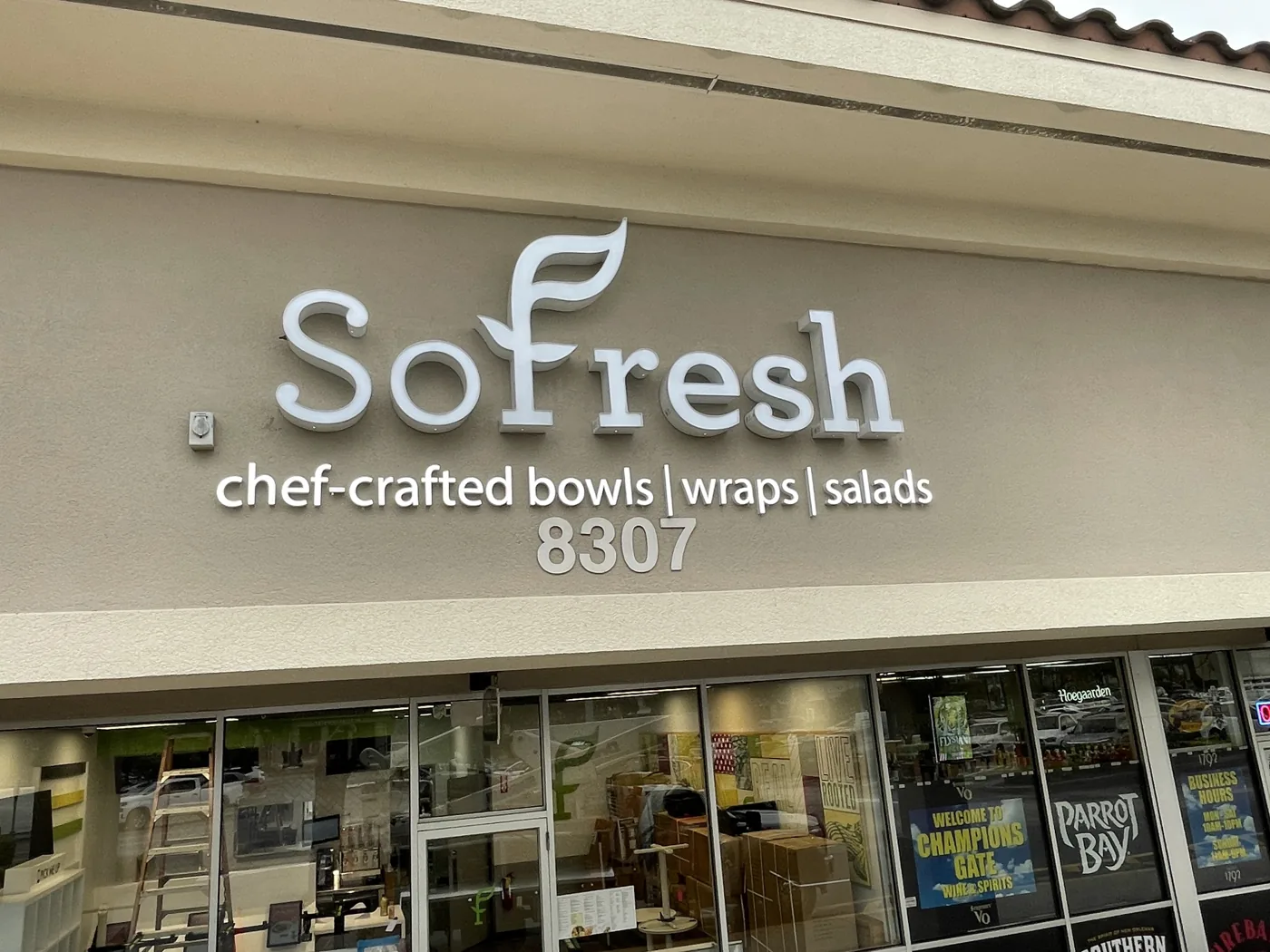
A storefront sign is the main sign on the front of your business. It tells people who you are and which door is yours.
For most brands, that's a set of channel letters or a sign cabinet above the entrance. A full storefront package often adds a blade sign for the sidewalk, an awning, window graphics and a panel on the shopping center's pylon sign.
With one location, you choose a sign and get it approved. With twenty, every storefront has a different wall, a different landlord and a different city sign code. Your brand has to look the same in every city while each sign passes its own review. We've managed that for over 30 years, coast to coast.
Types of Storefront Signs
Most storefront sign packages are built from the same handful of sign types. Here's what each one does well and where it fits.
Channel Letters
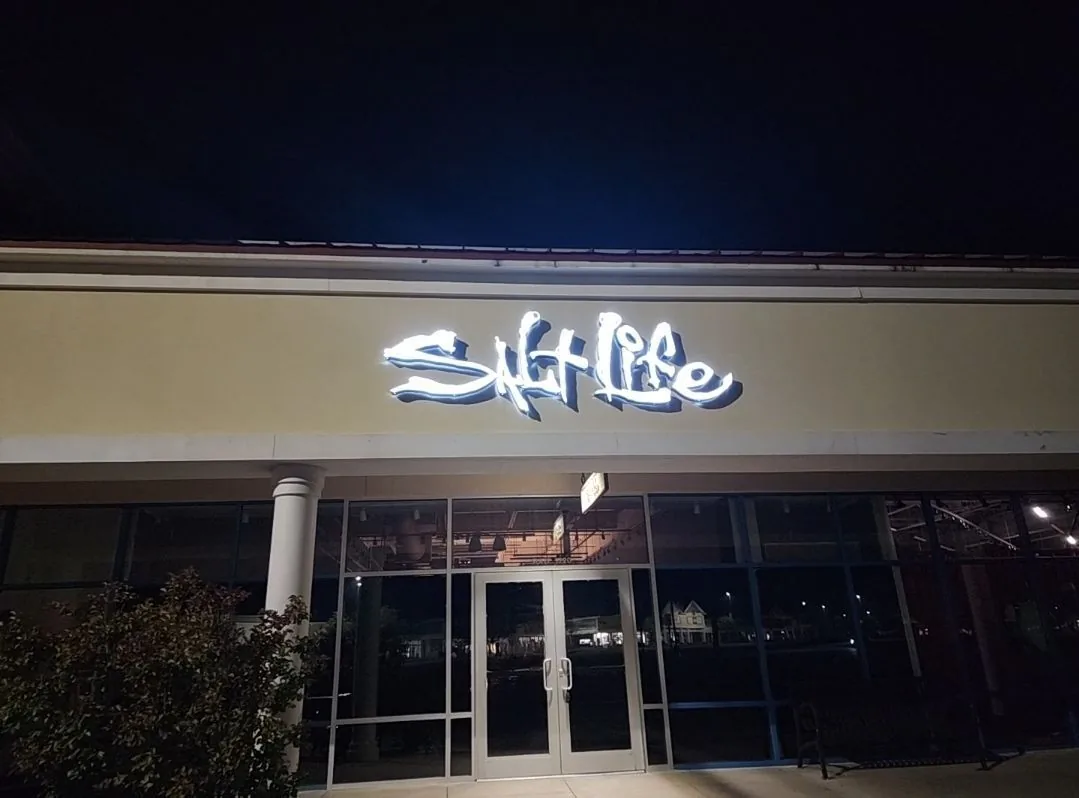
Individual 3D letters mounted on the wall or on a raceway. They can be lit from the front, lit from behind for a halo glow, or left unlit. Open-face letters with exposed LEDs give a faux neon look.
Channel letters are the most common main sign in shopping centers, and many landlord criteria require individual letters.
Channel letter signs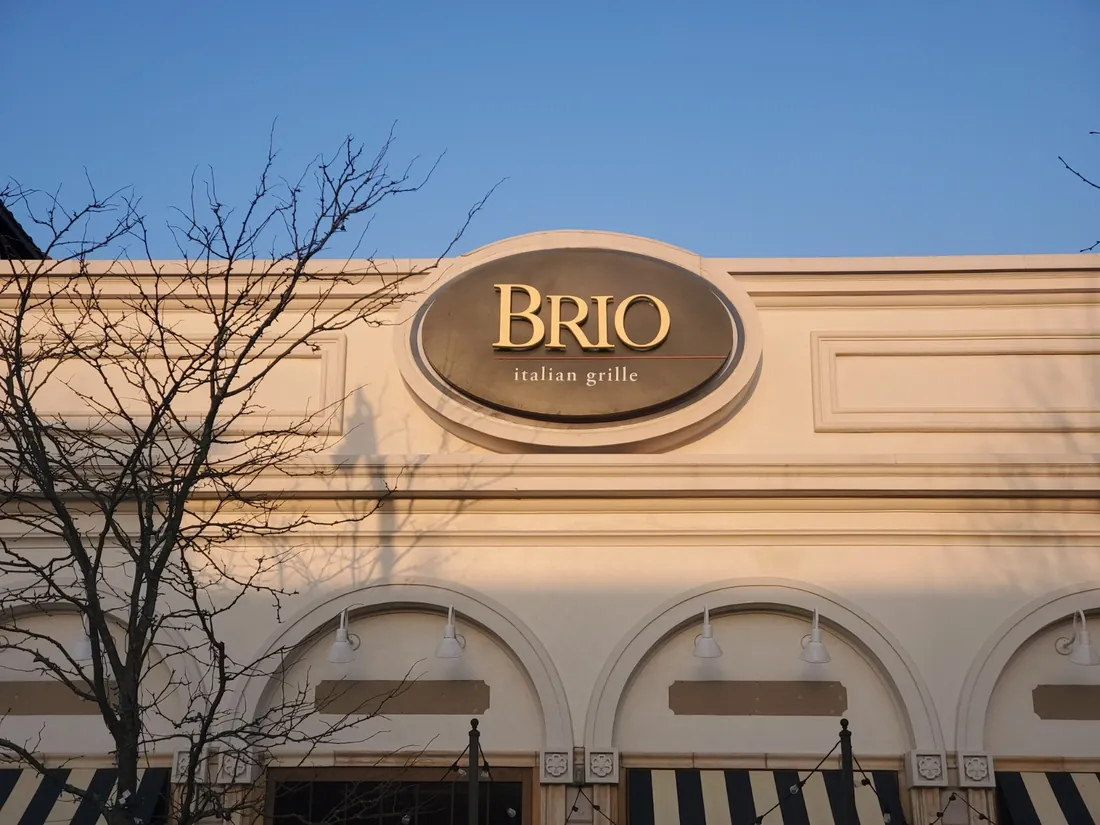
Cabinet and Push-Through Signs
A lit box with your logo on the face. On a push-through sign, the logo is cut out of an aluminum face and acrylic letters push through it, so only the letters glow.
Cabinets can make a future rebrand easier, since a new face can often go in without rebuilding the sign.
Custom sign fabrication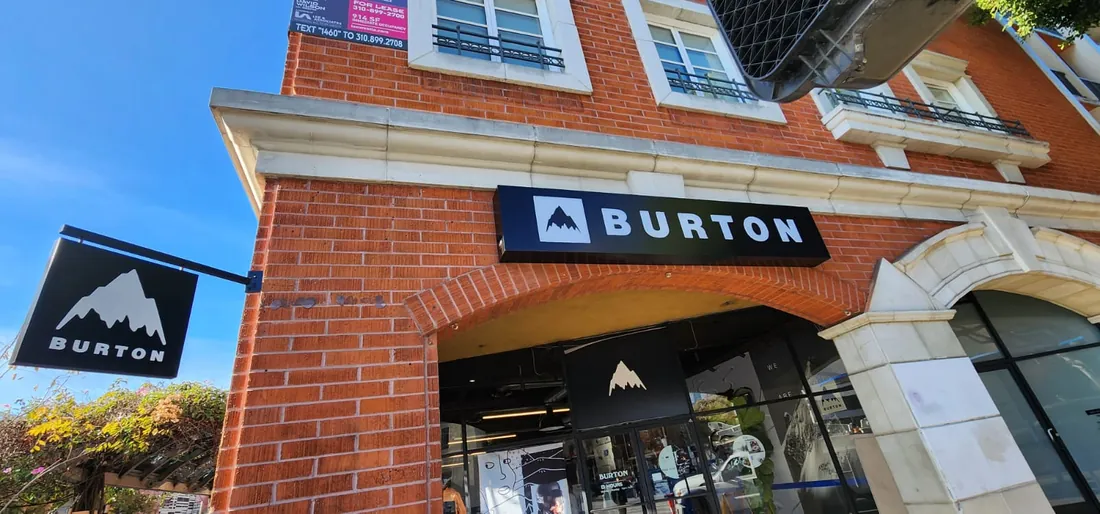
Blade Signs
A sign that sticks out from the building, so people walking along the sidewalk can read it from both directions. It's the sign that works hardest in downtowns and walkable shopping districts.
Most cities treat blade signs as projecting signs, with rules on height, clearance and how far they reach.
Blade signs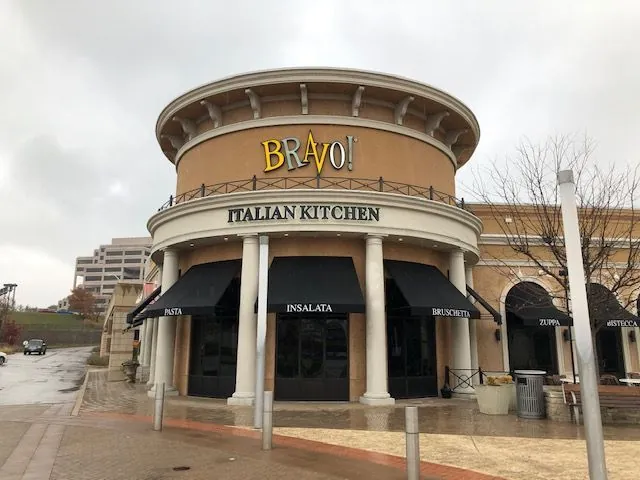
Awnings
Fabric or metal awnings carry your name, shade the windows and mark the entrance from down the block.
You'll see them most on restaurants, cafes and street-front retail.
Awnings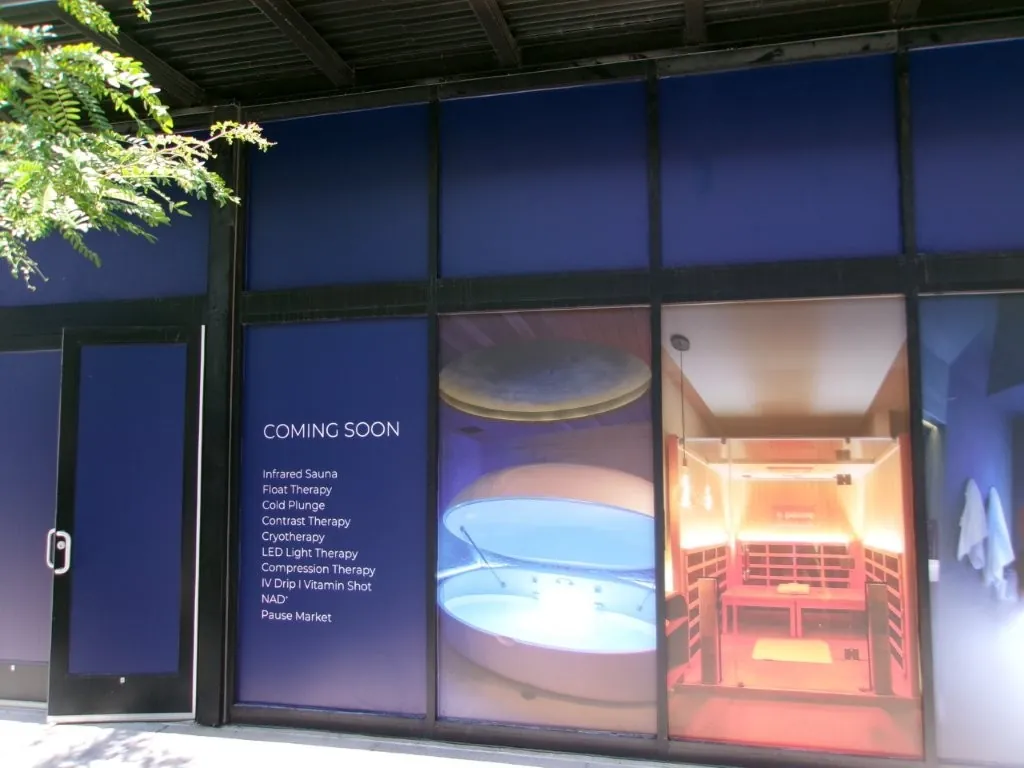
Window Graphics
Printed vinyl on the glass for your logo, hours, promotions or privacy.
Window graphics are also the fastest way to get your brand on a new store while the permanent sign is still in permitting.
Custom printed signs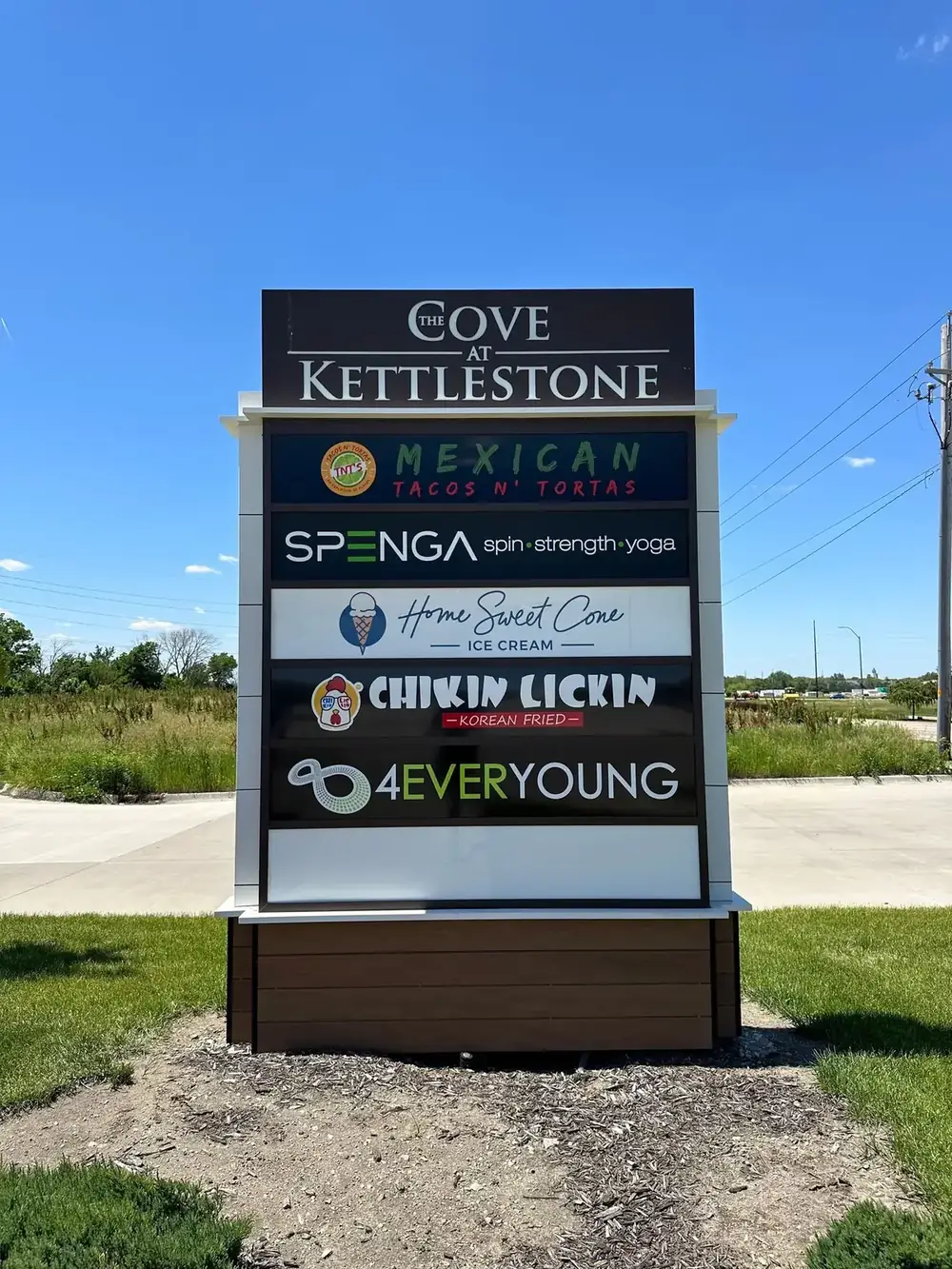
Monument and Pylon Panels
Freestanding signs near the road, so drivers can find you before they turn in.
In most shopping centers the pylon belongs to the landlord, and your brand gets a tenant panel. A standalone building often gets its own monument sign.
Freestanding signsHow to Choose the Right Storefront Sign
Six practical questions decide which storefront sign fits your business. Answer them before anyone starts a design.
Who needs to see it?
Drivers read the wall sign and the pylon panel from the parking lot and the road. People on foot read blade signs, awnings and windows. Most storefronts need both.
What does the landlord allow?
Shopping center sign criteria can set the sign type, letter height, colors, lighting and mounting. Read them first, since they're often stricter than the city code.
What does the city allow?
The sign code caps how big your sign can be, often based on the width of your storefront, and controls lighting and placement.
Are you open after dark?
If you are, plan the lighting with the design. It changes how the sign is built, the power at the wall and sometimes the permit.
What's the wall made of?
Brick, stucco, metal panels and glass all mount differently. A site survey shows what's really there before the design is final.
Will there be more locations?
If so, design a standard with approved sizes and versions, so each new site can flex for its code without drifting from the brand.
Storefront Sign Permits
Almost every storefront sign needs a sign permit, and lit signs usually need an electrical permit too. There's no national sign permit. Each city, county or special district writes its own rules.
A sign code usually controls:
- Size: the maximum sign area and letter height
- Coverage: how much of the facade your signs can cover
- Number and placement: how many signs you can have and where they go
- Lighting: whether a sign can be lit, and how bright
- Projection: how far a sign can stick out from the wall
- Structure and power: engineering and electrical requirements for the sign and the wall
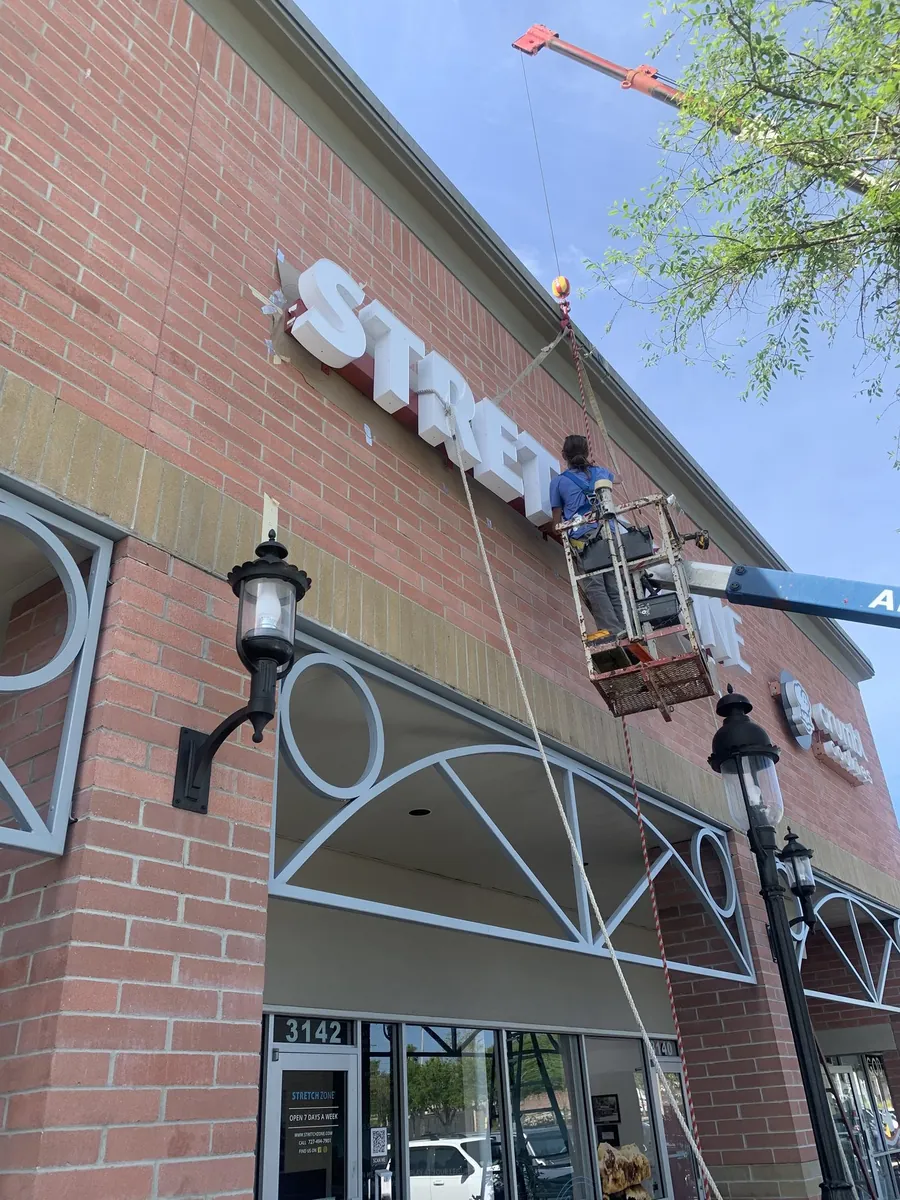
Most sign permits take 10 to 30 days. Historic districts and dense city centers take longer. In districts with extra overlays, like Miami's Design District or San Diego's Gaslamp Quarter, we've seen permits take over a year. Read more on how long sign permits take.
A permit package usually includes scale drawings, the landlord's authorization, a site plan, the application and, for some signs, engineering. We check the code for every address before the design is final, file the package and answer the city's corrections until it's approved.
Landlord Sign Criteria and Approval
In a shopping center, two approvals stand between you and a new sign. The landlord reviews it first, against the center's sign criteria, and then the city.
Sign criteria are part of the lease. They can set the sign type, letter height, colors, lighting, mounting and even the hours your sign stays lit. Sometimes they're stricter than the city code, and the sign has to meet both.
Many cities want the landlord's authorization with the permit application, so landlord review comes first on the schedule. It can take a few days or a few weeks.
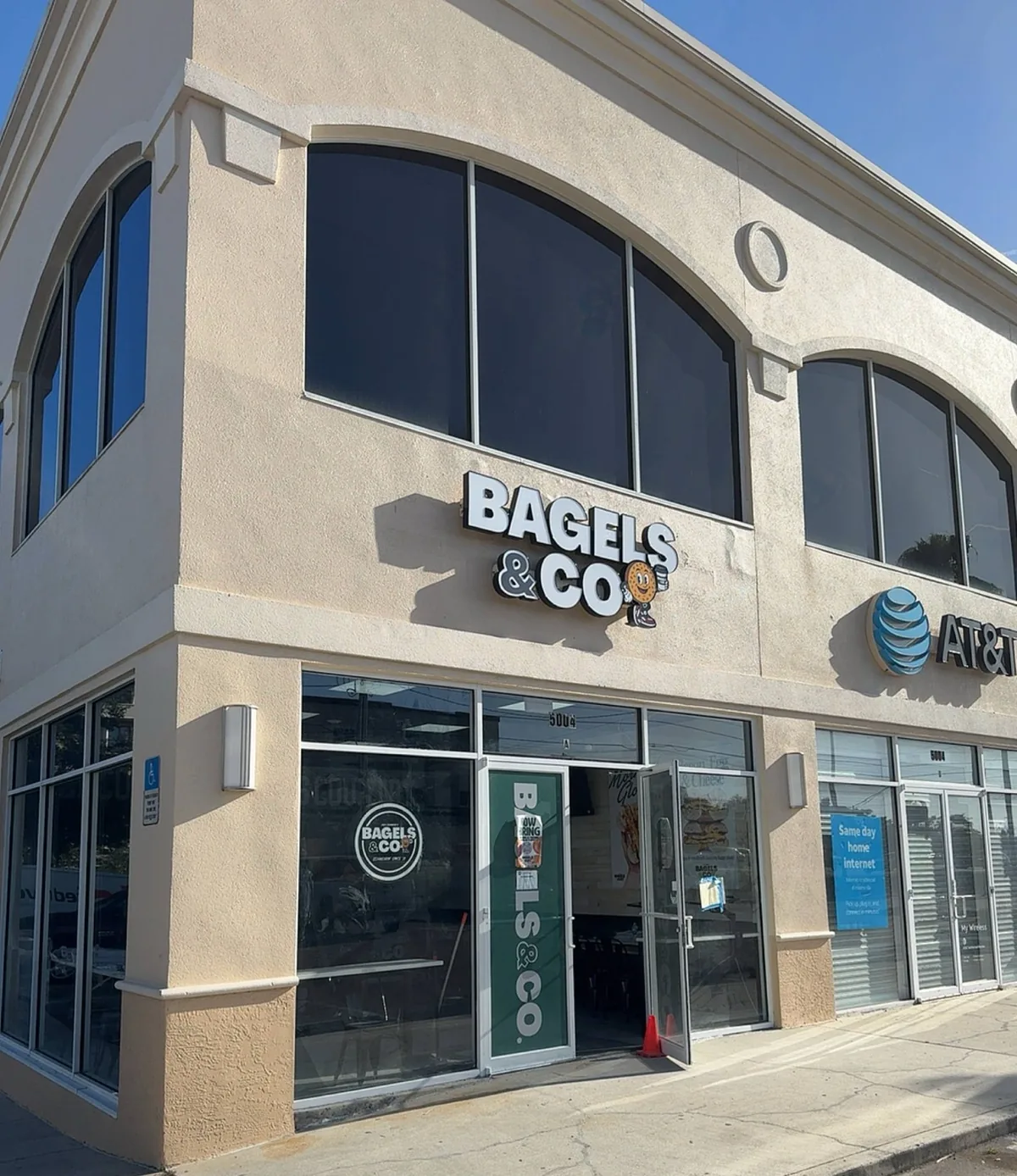
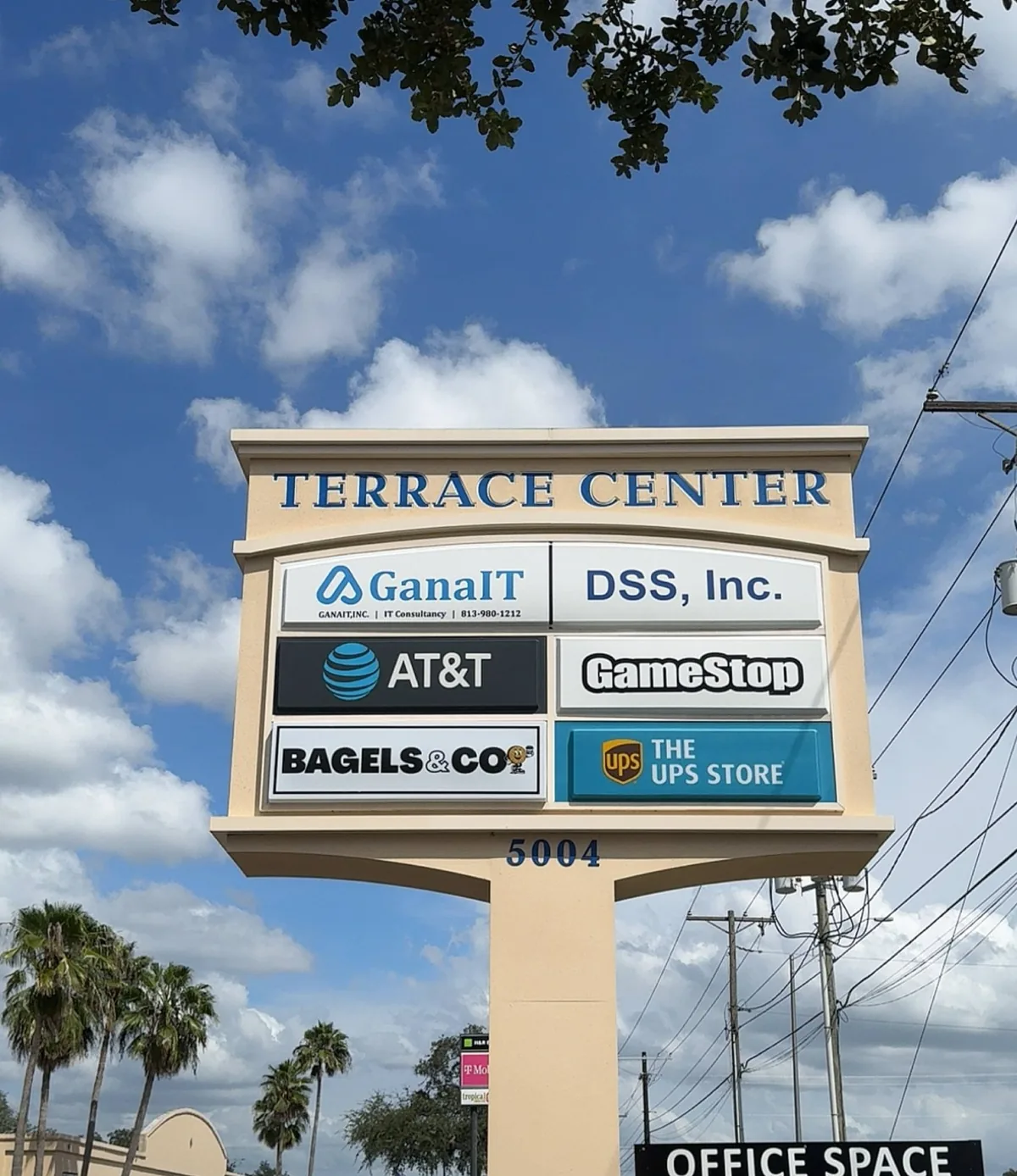
The pylon out by the road usually belongs to the landlord too. Your brand gets a tenant panel built to the size and specs the landlord sets. That's how Bagels & Co got its panel on the Terrace Center pylon in Tampa, alongside its new storefront letters.
On a rollout, every center has its own criteria. We collect them for each site up front, so one design standard can flex for each landlord without starting over.
Rolling Out Storefront Signs Across Many Locations
A store can be finished and staffed while its sign still waits on an approval that should have started weeks earlier. Across a rollout, that delay repeats at every location unless signs are planned with the build.
We treat storefront signs as a construction milestone from the first site survey. One named project manager runs the whole program. You can check every location in Smartsheet whenever you like, and you'll still get a call, a text or an email when something needs a decision.
Survey every site
Measurements, photos, wall construction, power at the sign location, existing signs and access for the install crew. The survey catches what drawings miss.
Build one standard that flexes
One approved design with set sizes, lighting versions and mounting options, so each site can match its code and its landlord without drifting from the brand.
Approve and permit by location
Landlord criteria and the city code get checked for every address. Approvals run side by side, and the slowest jurisdictions start first.
Phase fabrication to approvals
Fabrication follows approvals, site by site or in batches. Building too early risks remaking a sign the city changes. Building too late squeezes the install.
Install around each opening
Crews are scheduled to each site's opening date. If a permanent sign can't make the date, a temporary banner or window graphic keeps your brand on the storefront until it does.
Close out every site
Inspections passed and completion photos filed. On a rebrand, the old signs come down and the wall is patched and painted to the landlord's requirements.
See how we run multi-site signage programs and signage project management, or download our multi-site rollout checklist.
Storefront Signs We've Installed
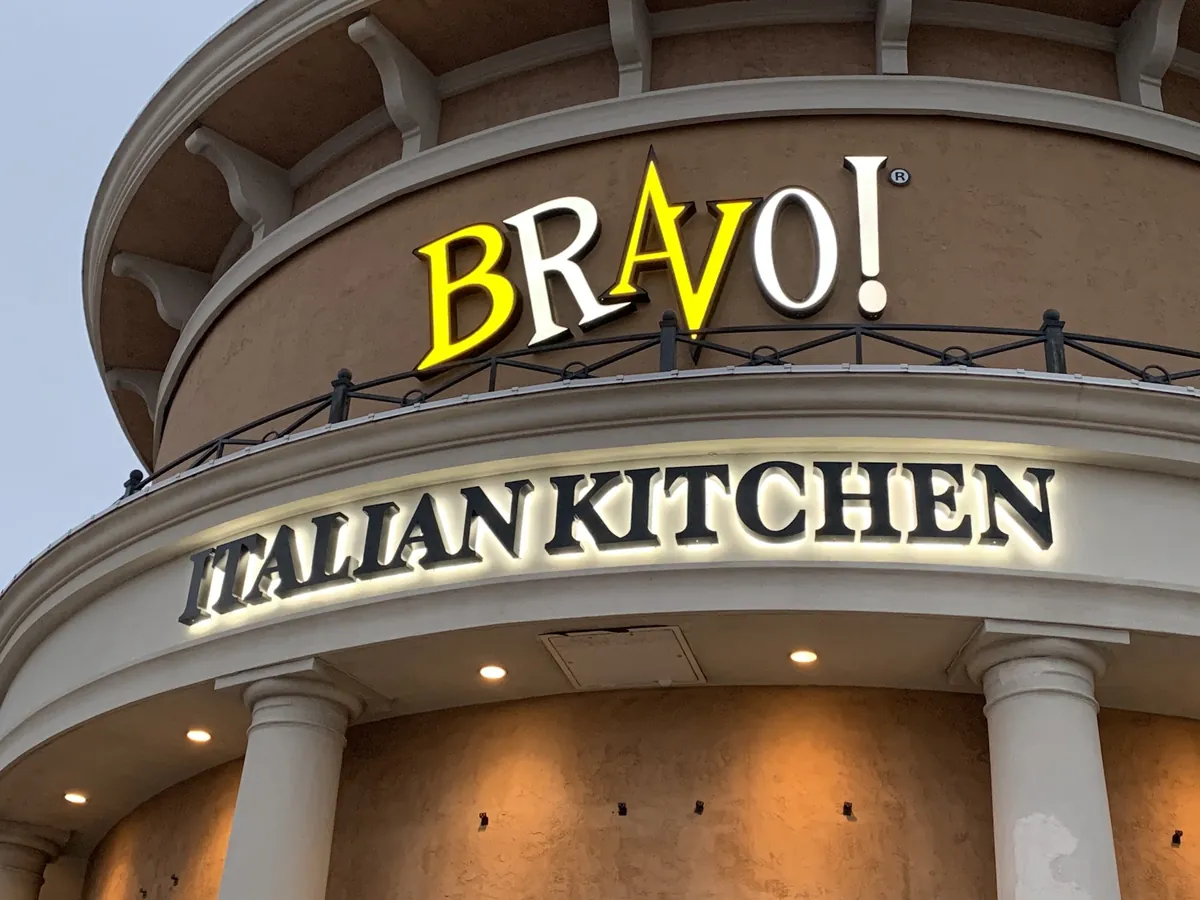
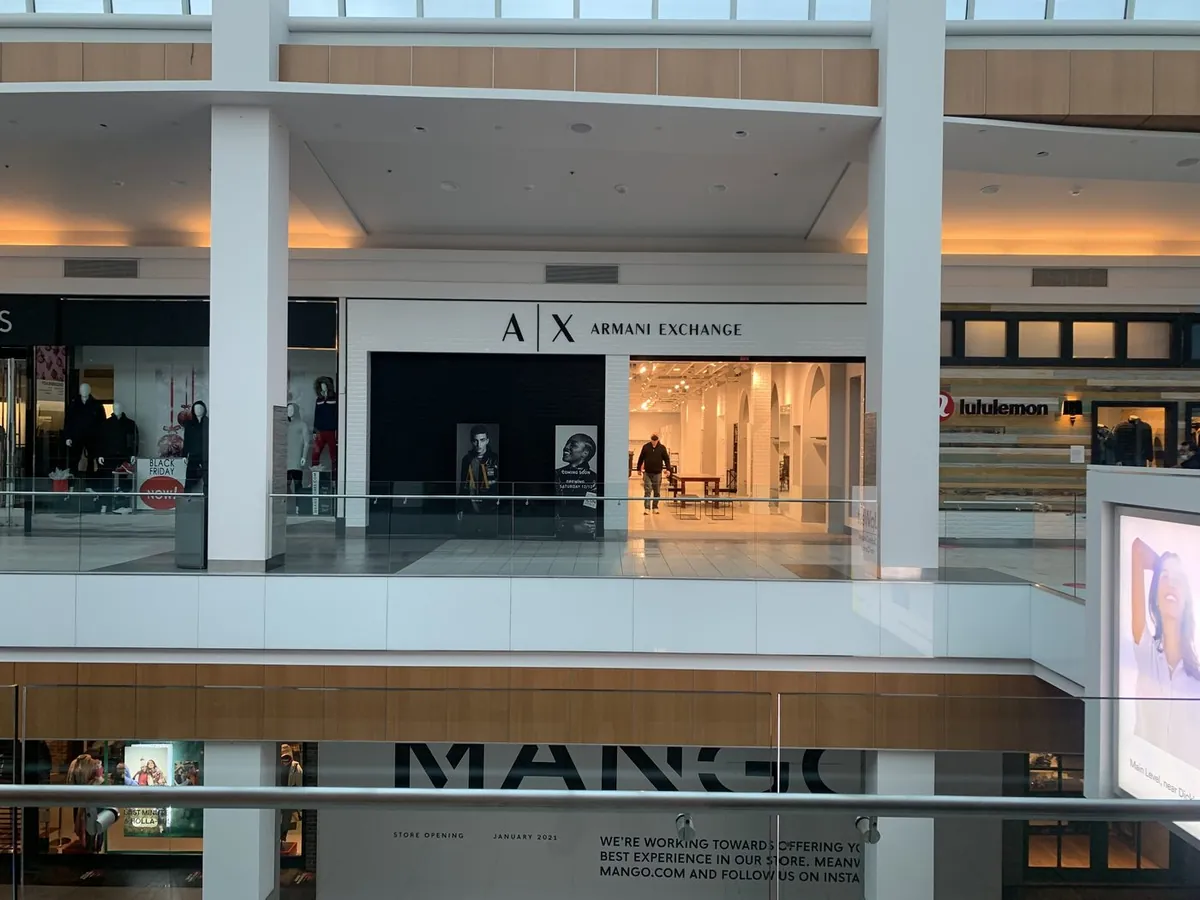
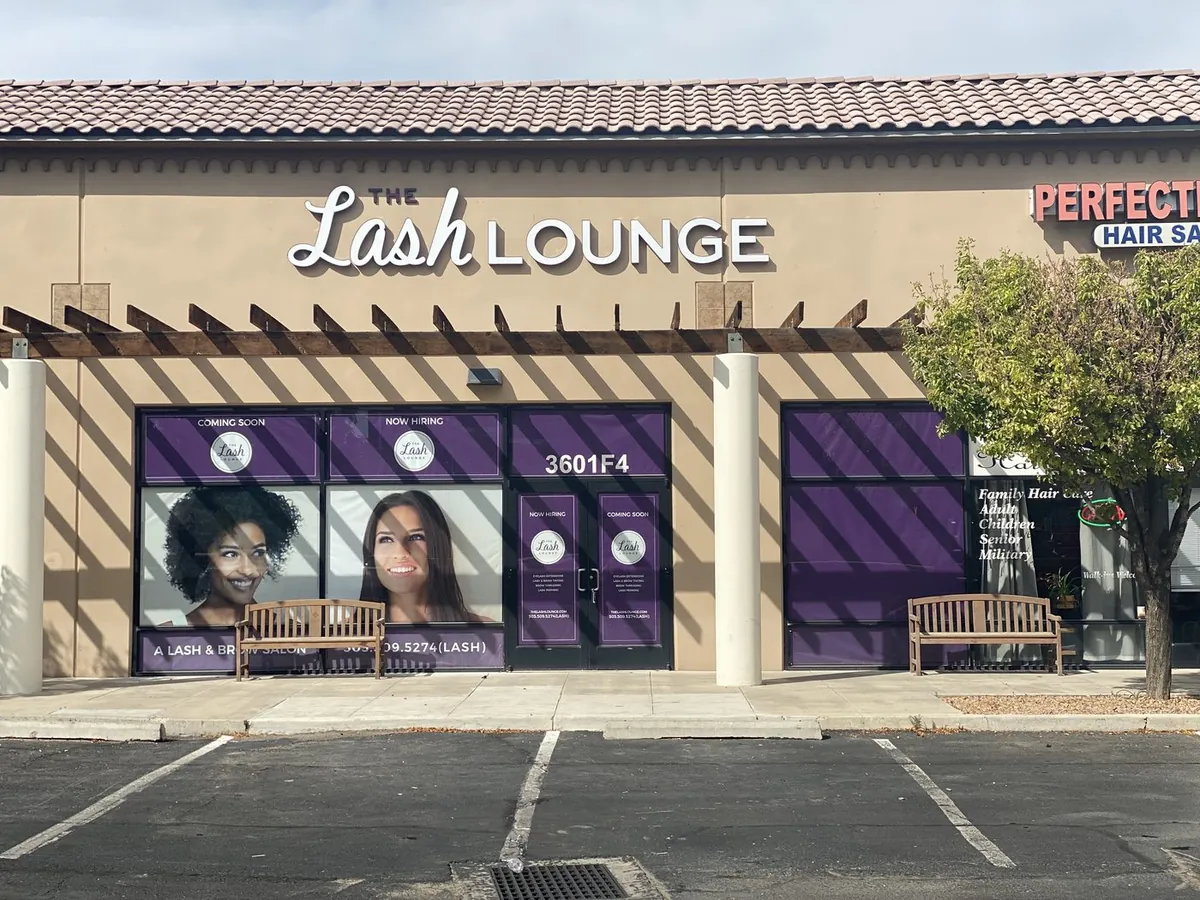
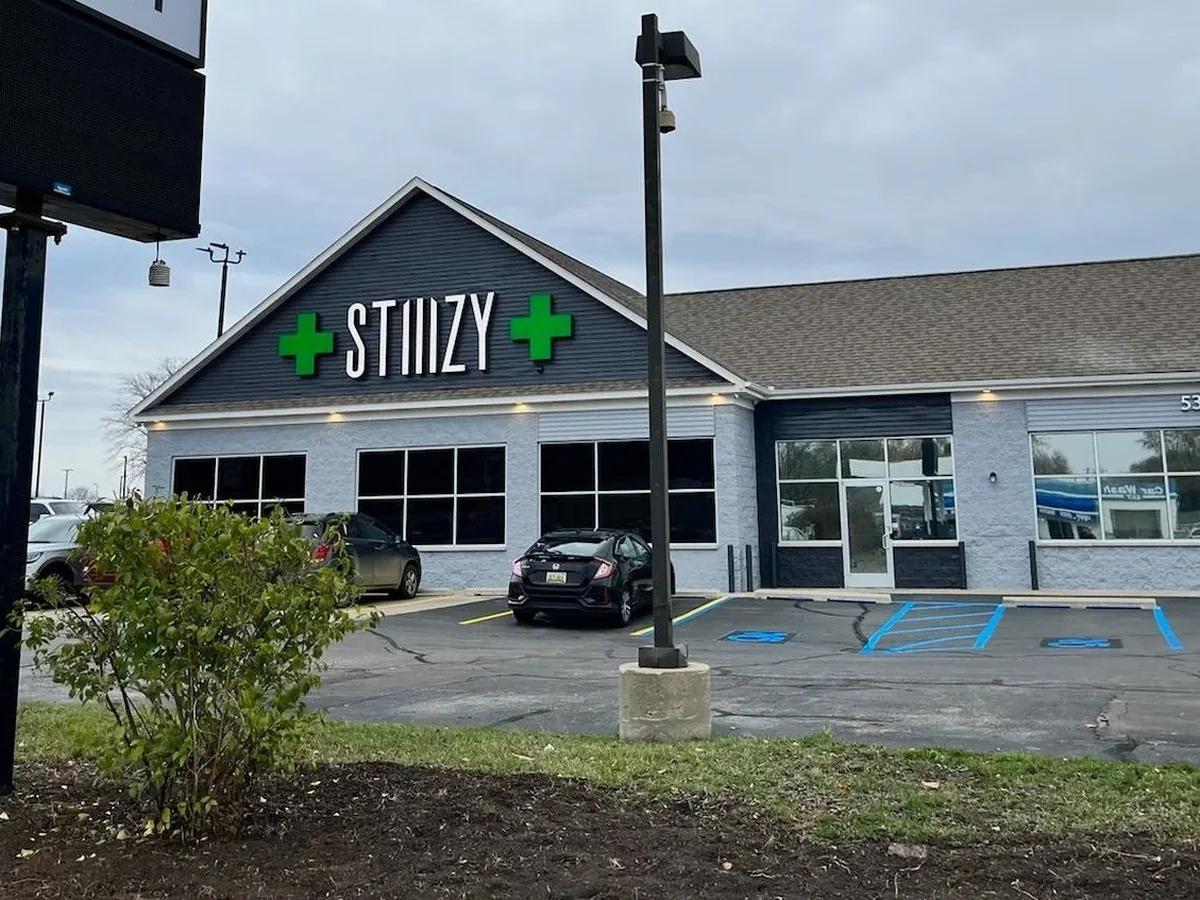
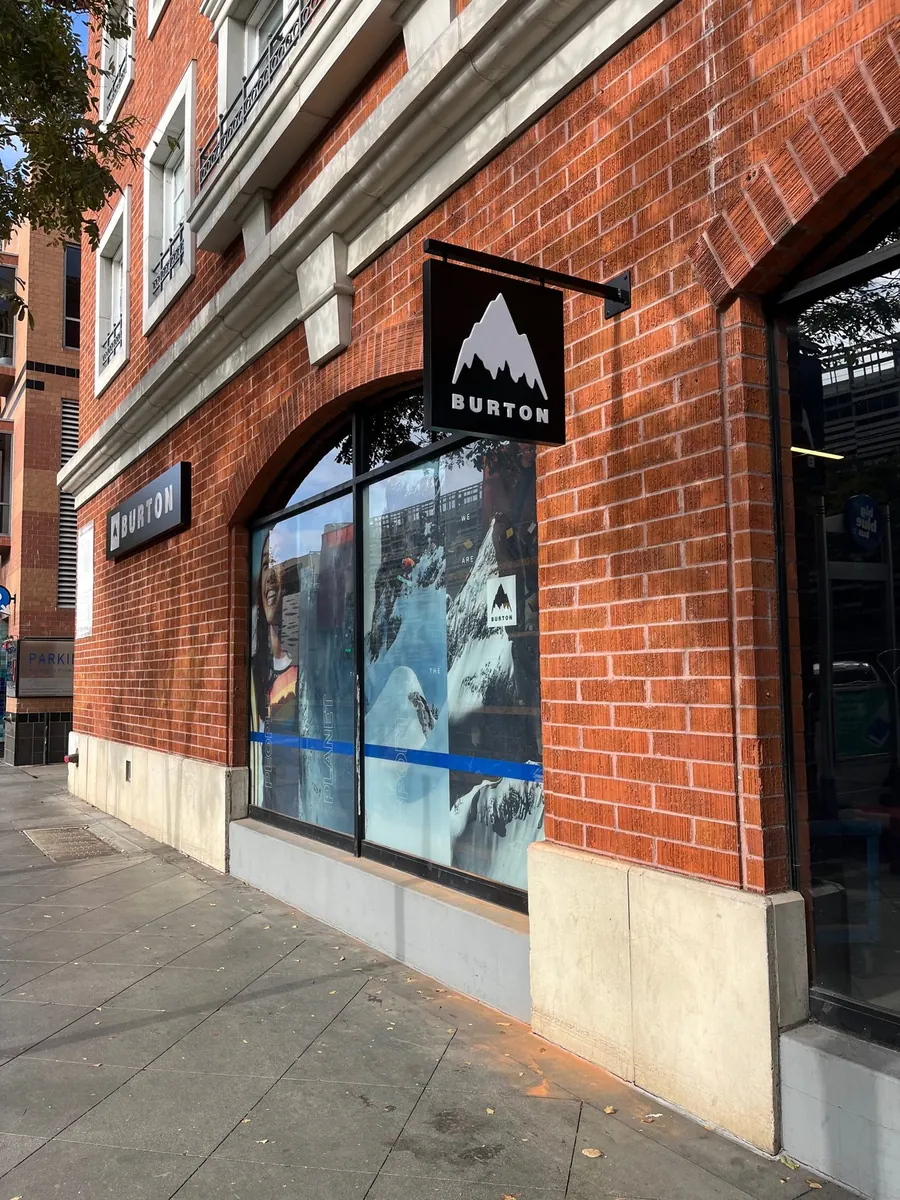
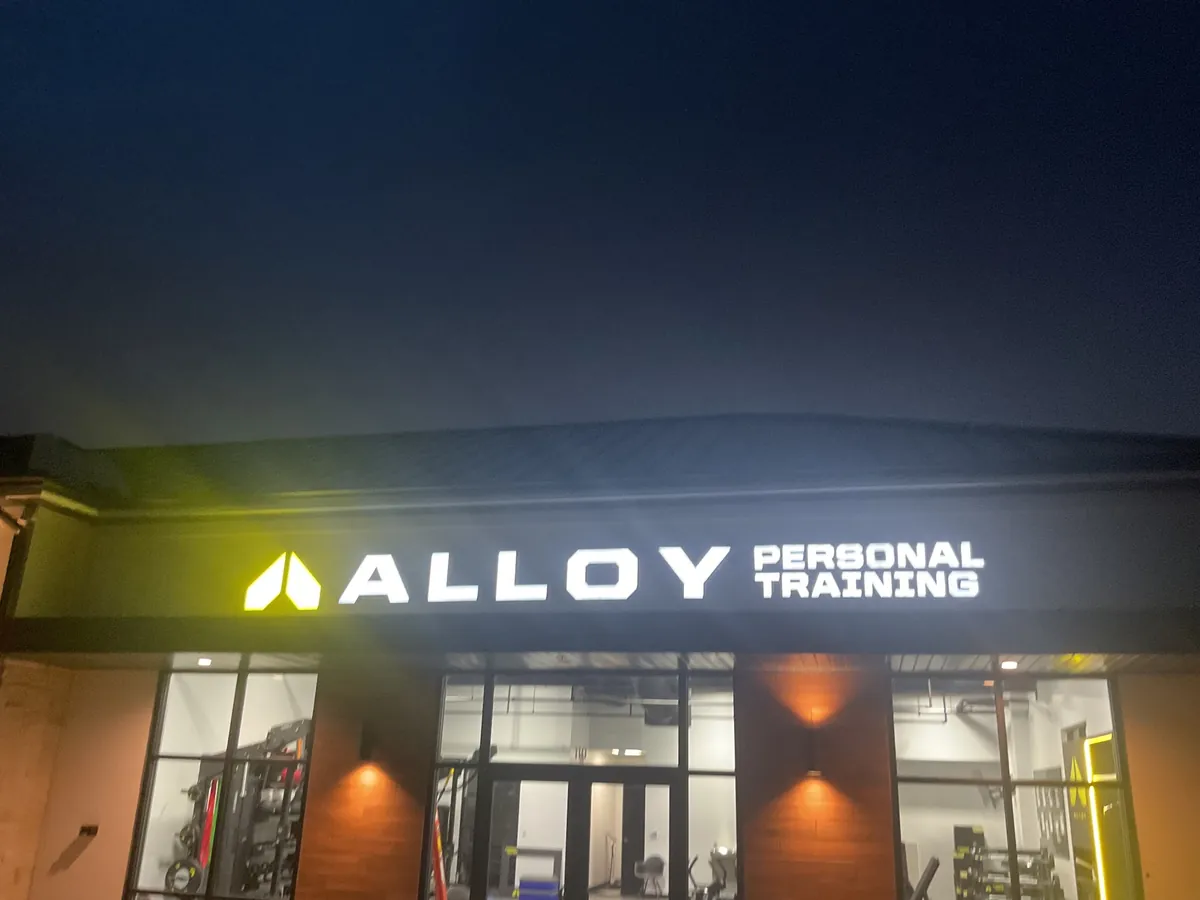
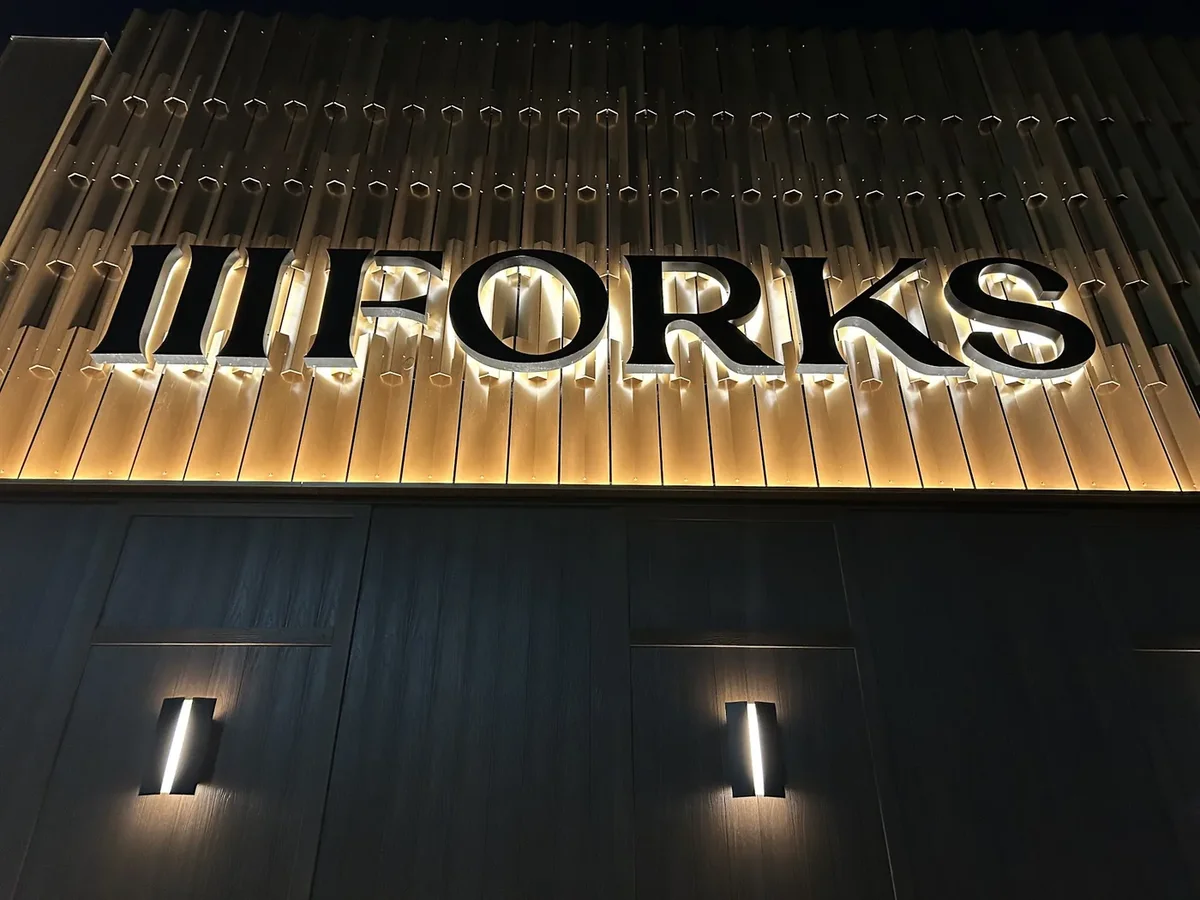
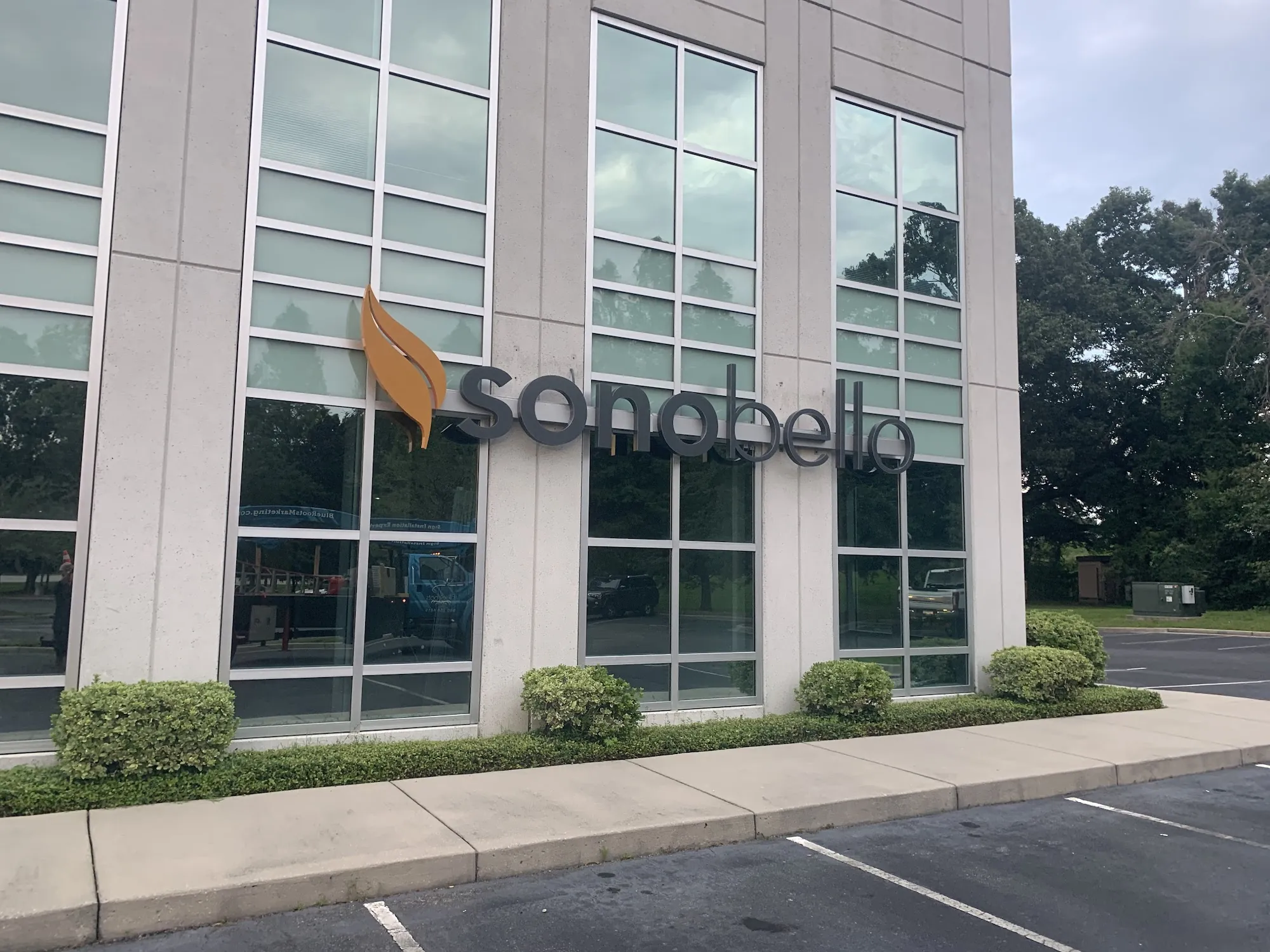
Read the stories behind the Bagels & Co, Salt Life, Burton and Armani Exchange storefronts.
What Storefront Signs Cost
The same logo can cost very different amounts at two addresses. Size, lighting, materials, mounting, the wall, building height, engineering, permits and install access all move the number.
On a multi-site program, look past the fabrication quote. Power, service, a future rebrand and removal at the end of the lease all add to what a sign costs to own. We break it down in The True Cost of Storefront Signage and what a national sign company charges.
Send us your locations and storefront photos, and we'll come back with a per-site cost breakdown.
Storefront Sign FAQs
What is a storefront sign?
It's the main sign on the front of your business, usually above the entrance, showing your name or logo so people can find your door. A full storefront package can also include a blade sign, an awning, window graphics and a panel on the pylon sign.
What are the most common types of storefront signs?
Channel letters, cabinet and push-through signs, blade signs, awnings, window graphics, and monument or pylon panels. Channel letters are the most common main sign in shopping centers.
Do storefront signs need a permit?
Almost always. Most cities require a sign permit, and lit signs usually need an electrical permit as well. In a shopping center, the landlord also has to approve the sign against the center's sign criteria.
How long does it take to get a storefront sign?
Permitting usually sets the schedule. Most sign permits take 10 to 30 days, while historic districts and dense city centers can take months. Once we know the jurisdiction, we can give you a realistic install date.
How much does a storefront sign cost?
It depends on size, lighting, materials, mounting, the wall, building height, permits and install access, so the same sign can cost more at one address than another. Send us your locations and photos, and we'll send a per-site breakdown.
Can our storefront signs match across locations with different sign rules?
Yes. We build one design standard with approved sizes, lighting versions and mounting options. Each site gets the version its city and landlord will approve, and your brand still looks the same everywhere.
Do you remove old storefront signs during a rebrand?
Yes. We take down the old signs, patch and paint the wall to the landlord's requirements and install the new ones, location by location. See our rebranding programs.
Do you install storefront signs nationwide?
Yes. National Sign Team works in all 50 states, on single storefronts and multi-location programs, from the site survey and permitting through installation and completion photos.