A multi-site signage rollout is not forty sign projects. It is one program, and the work that decides whether it opens on time happens before the first sign is built. This checklist is organized by phase: what you should have in hand before each one starts, and who should own it. Use it to run your own rollout, or to test whether the multi-site signage rollout partner you are evaluating has actually thought it through.
Before kickoff: the four things to settle first
One owner. Name the single person who owns the whole program, on your side and on the sign partner's side. A rollout with three internal owners and a different shop in every market has no owner at all.
The location list, with a status for each. New build, relocation, rebrand of an existing site, or closure. Each one runs a different path through the program, and they can all live on one schedule if you know which is which on day one.
A phasing rule. By region, by opening date, by lease event, or by budget quarter. Decide it before the bids come in, because a bid you cannot phase is a bid you cannot control.
Brand standards in writing. If your brand book does not yet cover signage, that is the first deliverable, not the third. Materials, finishes, illumination, and color have to be documented before anyone designs for site one.
Phase 1: Surveys
Before any design work:
- Every site surveyed, not just the first few. Access, mounting surface, power, sight lines, and an inventory of the signage already on the wall.
- Landlord criteria collected for every leased site. Most shopping centers publish sign criteria that override what code allows.
- Photos and measurements filed per location, so the design team is not working from a lease drawing.
A survey found late is a change order. Our guide to avoiding signage surprises with accurate site surveys covers what a complete survey includes.
Phase 2: Design and brand book
- Site-specific drawings for each location, built from the survey, not from a template.
- Maximum sign sizes worked out against each local code so you use the space you are allowed without triggering a variance.
- Cut sheets for every sign type in the program, so a fabricator in any market builds the same sign.
Phase 3: Permitting and landlord approvals
This is the phase that sets the calendar. Before you accept an install date:
- A permit strategy per jurisdiction, with who files, who responds to corrections, and how long that city typically takes.
- Landlord sign-off in writing for every leased site.
- A plan for the sites that will need a variance or a landlord exception, because there are always a few.
If a bid promises install dates without a permit plan, the dates are fiction. See navigating sign permitting for national rollouts for the traps that show up most often.
Phase 4: Fabrication
- A per-site cost breakdown, so you can verify, prioritize, and phase line by line.
- Manufacturing and budget reviews done before production runs, with value engineering options on the table while they are still cheap to take.
- One spec across every fabricator, with prototypes approved before the full run.
Phase 5: Installation
- Installs scheduled by phase, with after-hours work and site conditions confirmed per location.
- Removal, patch, and paint scheduled for the rebrand and closure sites, and a temporary banner where the opening date beats the permanent sign.
- Completion photos and documentation required for every site before it is marked done.
How a national partner moves crews and product across markets is covered in signage logistics at scale.
Throughout: status you can see
The single most useful question to ask a sign partner is how you will know, today, which sites are permitted, which are fabricated, and which just got a landlord objection. If the answer is a phone call when you ask, it does not scale past ten locations. Online milestone tracking per site, available to you around the clock, is the point of hiring a program partner. It is how our project management works and why transparent project management leads to better outcomes.
What this looks like in practice
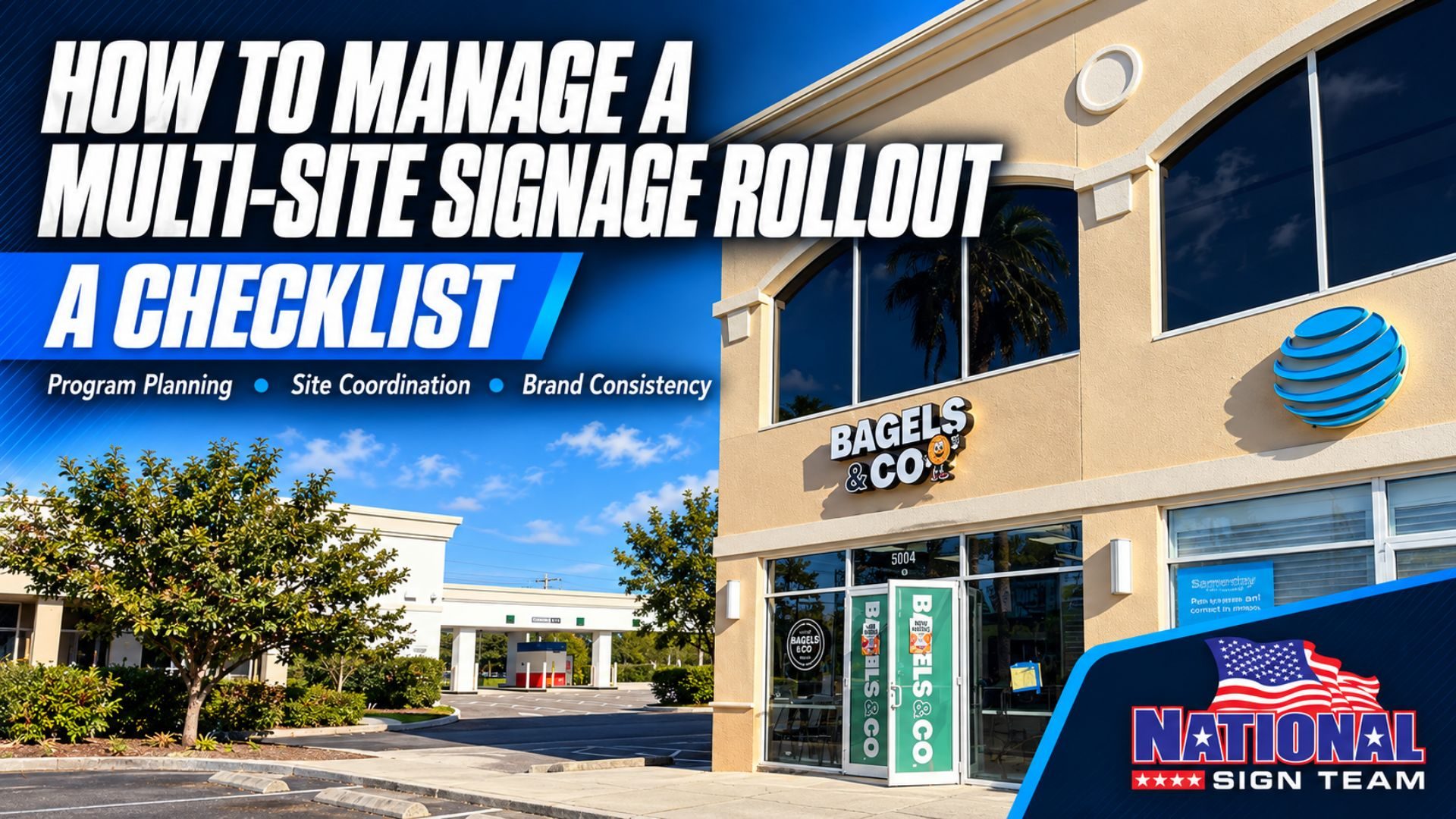
Bagels & Co opened a new Tampa location that had to look like every Bagels & Co before it: face-lit channel letters with the mascot on the facade and a tenant panel on the center's pylon. National Sign Team ran it as one project, with the city permits, the landlord approvals, fabrication to brand spec, and installation on one schedule. The Bagels & Co client spotlight has the photos.
The short version
Settle the owner, the location list, the phasing rule, and the brand standards before kickoff. Survey everything. Let permitting set the calendar. Demand a per-site breakdown. Insist on status you can see without asking. That is the whole checklist, and it is most of the difference between a rollout that opens on schedule and one that explains why it did not.
Ready to run one? See how we structure a multi-site signage program from survey to completion photos, or start a project and tell us about your locations.
Frequently asked questions
What should a multi-site signage rollout kickoff cover?
The program owner on each side, the full location list with each site's status, the phasing rule, the brand standards for signage, and the reporting method. Surveys are scheduled at kickoff so design never starts from assumptions.
Who should be on the rollout team?
On your side: the program owner, construction or facilities, and whoever controls the brand. On the sign partner's side: a single project manager, design, permitting, and installation coordination. Fabrication can be regional as long as the management is not.
How many locations should go in a phase?
Enough to keep crews and fabrication efficient in a region, and few enough that a permit delay in one city does not stall the whole phase. The right number depends on geography and opening dates more than on a fixed count.