Built for restaurant
construction teams.
A restaurant cannot open without its sign, and the sign has the longest lead time of anything on the opening schedule.
Restaurant and hospitality signage is the full set of exterior and interior signs that identify a restaurant, bar, cafe, or entertainment venue and move guests from the road to the table: illuminated storefront letters, blade signs, awnings, pylon and monument signs, drive-thru and pickup signage, window graphics, and the wayfinding and displays inside. On one location it is a sign project. Across a growing brand it is a program, and the program is what National Sign Team runs.
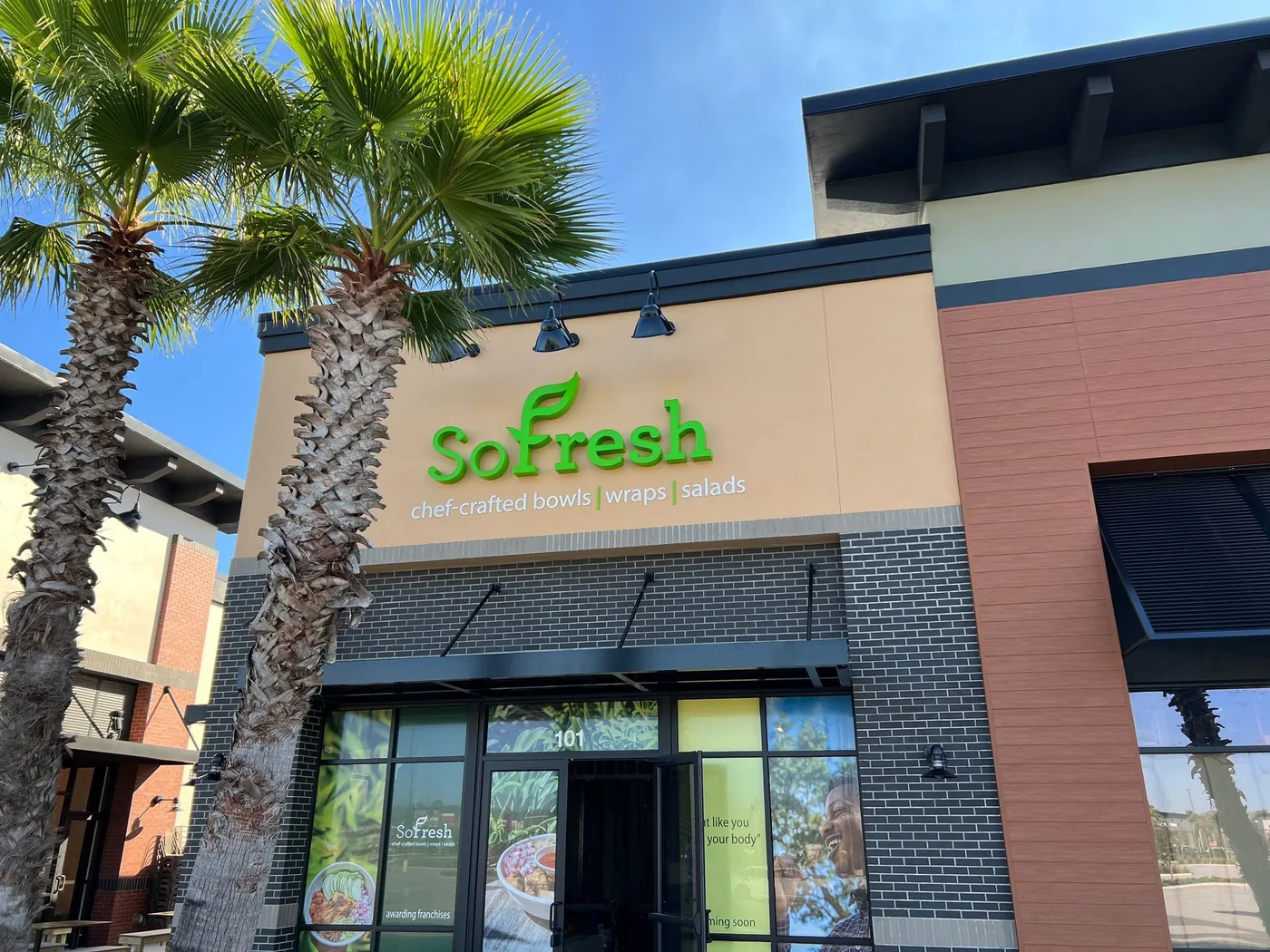
For over 30 years we have manufactured, managed, and installed signage for restaurant and hospitality brands in all 50 states, from the Chicken Guy, SoFresh, and Bonchon roll-outs to Brio, Bravo, Hard Rock Cafe, and Planet Hollywood. One point of contact carries every location from site survey through permit, fabrication, and installation, and you follow every milestone in our online project management system. The short version is on our Restaurants cut sheet.
How restaurant and hospitality signage differs from other signage
Every commercial sign has to be legible, permitted, and built to last. Restaurant and hospitality signage carries six pressures that retail and office signage usually does not.
The sign is on the critical path to opening
Lease commencement, hiring, and the marketing launch all point at one opening date, and the permanent sign has the longest lead time on that schedule, because the permit comes before fabrication and fabrication comes before the crane. Signage has to start with the construction drawings, not after the kitchen is in.
It works every night
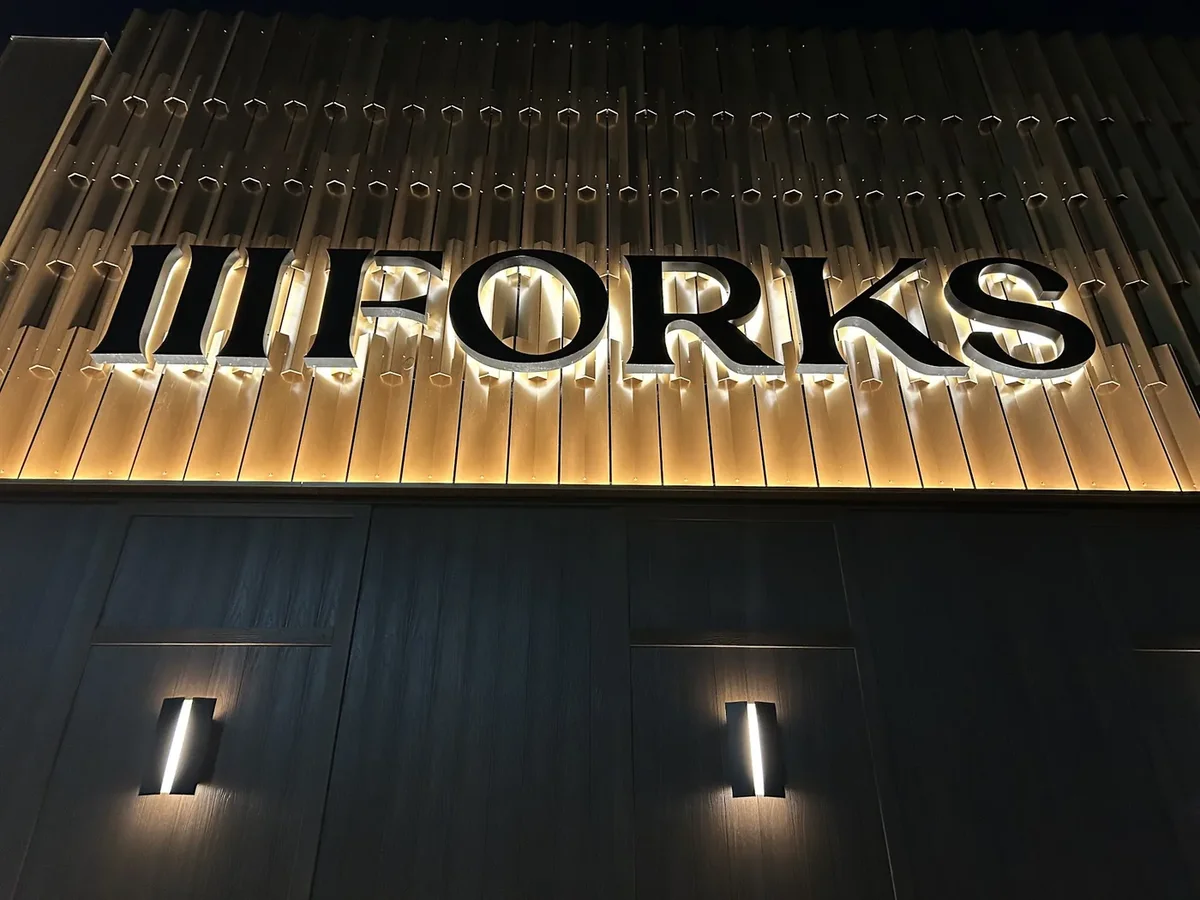
Dinner service, late hours, and weekends mean a restaurant sign does most of its work after dark. Illumination is a decision, not a finish: face-lit or halo-lit channel letters, exposed neon, or an LED conversion of an older cabinet, each with a different look, a different code review, and a different energy bill.
Guests arrive by car and decide fast
Most restaurant traffic is won or lost from the road. Visibility from the street is a separate problem from visibility at the door, and it is solved with pylon and monument signs, tenant panels, and directional signage, not with a larger storefront letter set.
Landlord criteria outrank the brand book
Lifestyle centers, malls, mixed-use buildings, and outparcels all publish sign criteria that limit size, letter height, illumination, color, and mounting. The approved prototype has to flex to each property without reading like a different brand.
Every market permits differently
A national brand opens in dozens of jurisdictions, and each city and county has its own code, its own review timeline, and its own reasons to deny. Our Planet Hollywood project in Times Square ran on strict installation windows in one of the busiest blocks in the country. A strip-center location in Florida runs on an entirely different set of rules.
The brand keeps moving
Restaurant brands remodel, refresh prototypes, and rebrand more often than most industries, and franchise systems add owners who each need the same sign. A program is what keeps the standard intact while the identity changes underneath it.
What to be thinking about before you order restaurant signage
These are the questions we work through with every restaurant and hospitality client before anything is designed. Each one answered early is a change order avoided later.
Start with a site survey, not a quote
Access, mounting surface, power at the sign location, sight lines from the road, and an inventory of the signage already on the building. A bid without a survey finds the problems in the field, on your schedule. Why accurate site surveys matter.
Get the landlord's sign criteria and the lease exhibit
The center's criteria decide letter height, square footage, illumination, and whether you get a panel on the pylon. Design to the criteria first, then fit the brand to it. Guessing here is one of the most common reasons a sign gets rejected after it is built.
Research the code before you commit to a size
Setbacks, allowable square footage, illumination limits, historic districts, and hours of illumination all vary by jurisdiction. We research the code and file the drawings for every location. The seven most common permit rejections.
Decide how guests will find you
From the road it is a pylon, a monument, or a tenant panel. On foot it is a blade sign and awnings. Inside it is wayfinding, menus, and point-of-sale displays. Plan the package around how people actually approach the property, not sign by sign.
Plan illumination around your hours
Face-lit letters read boldest at night, halo-lit letters read as more refined, and neon carries a heritage look. If you are inheriting older signage, an LED conversion cuts the energy bill and the maintenance calls.
Cover the opening timeline while permits run
Coming Soon window graphics and construction barricade graphics keep the brand visible for the weeks between lease signing and the permanent install. Construction graphics and temporary signage are part of the plan, not an afterthought.
Lock the brand book
Cut sheets with materials, finishes, colors, and illumination, so a franchisee in Ohio and a corporate store in Florida build the same sign. It is how franchise sign programs stay consistent when a different landlord or local shop is involved.
Plan the exit as well as the opening
The previous tenant's signage has to come down cleanly before yours goes up, and when a site closes or relocates it has to be handed back de-identified. Debranding and decommissioning belong in the same program.
The signs a restaurant may need beyond the storefront
The storefront sign identifies the building from the front, but it rarely works alone. Depending on the property, a complete restaurant sign package also covers the road, the sidewalk, the drive-thru or pickup lane, the parking lot, and the dining room. These are the sign types that carry most restaurant and hospitality programs. Specs are in our sign products catalog.
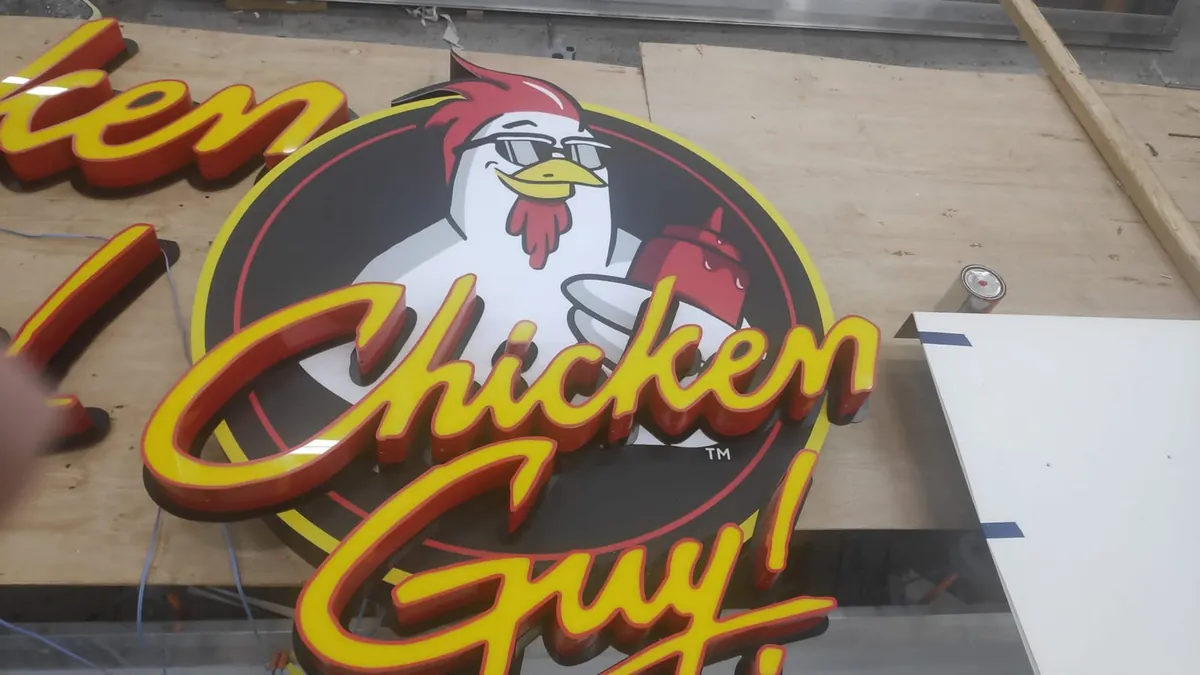
Channel Letters
The workhorse of restaurant identification. Face-lit letters carry the name in bold color at night, halo-lit letters glow against the wall for a refined read, and both hold up to the weather and the hours a busy venue keeps. Channel letter signage
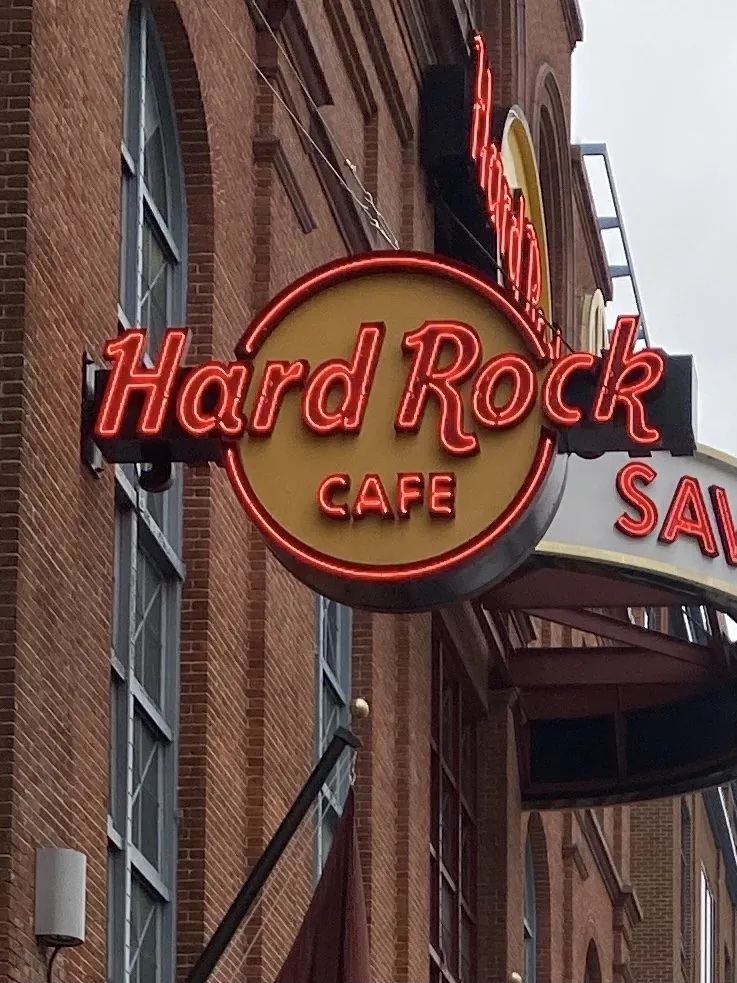
Blade Signs
Mounted perpendicular to the facade, a blade sign is how a restaurant reaches people walking down the block who cannot see the storefront face-on. Essential in downtown, urban, and lifestyle-center locations. Blade signs
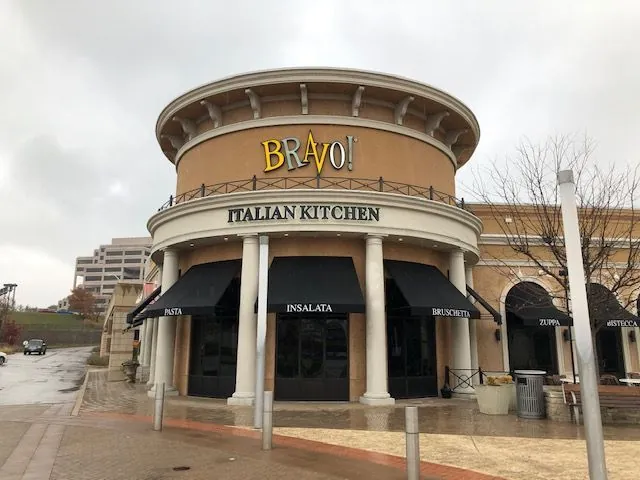
Awnings
Awnings shade the patio and the windows, and they carry the brand across the whole facade instead of one sign location. Branded awnings are a staple of full-service dining and cafe storefronts. Awnings
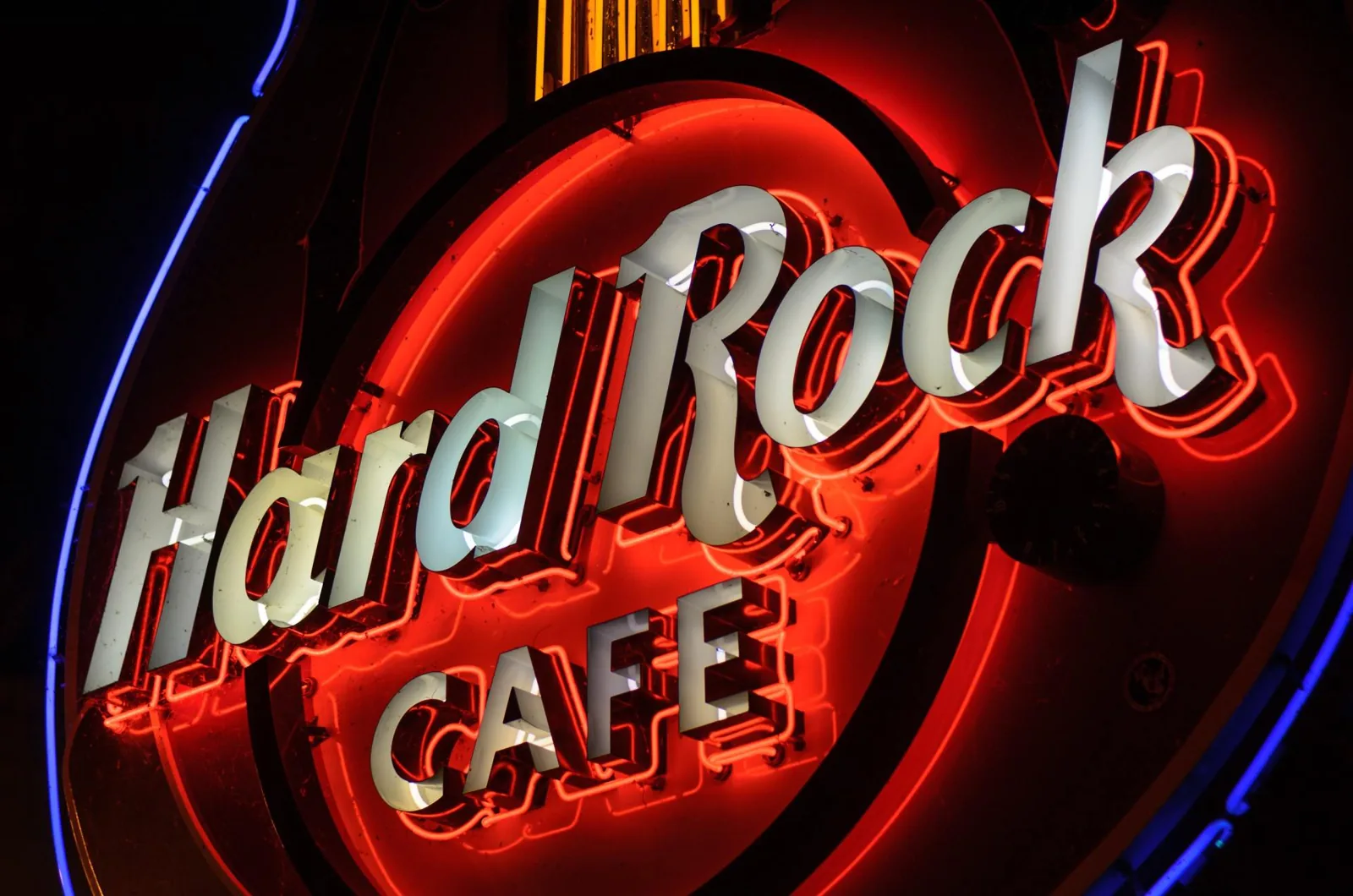
Neon
Exposed glass tube neon gives bars, diners, and entertainment venues a look nothing else matches, and LED neon delivers the same glow with lower maintenance where code or budget calls for it. Neon signs
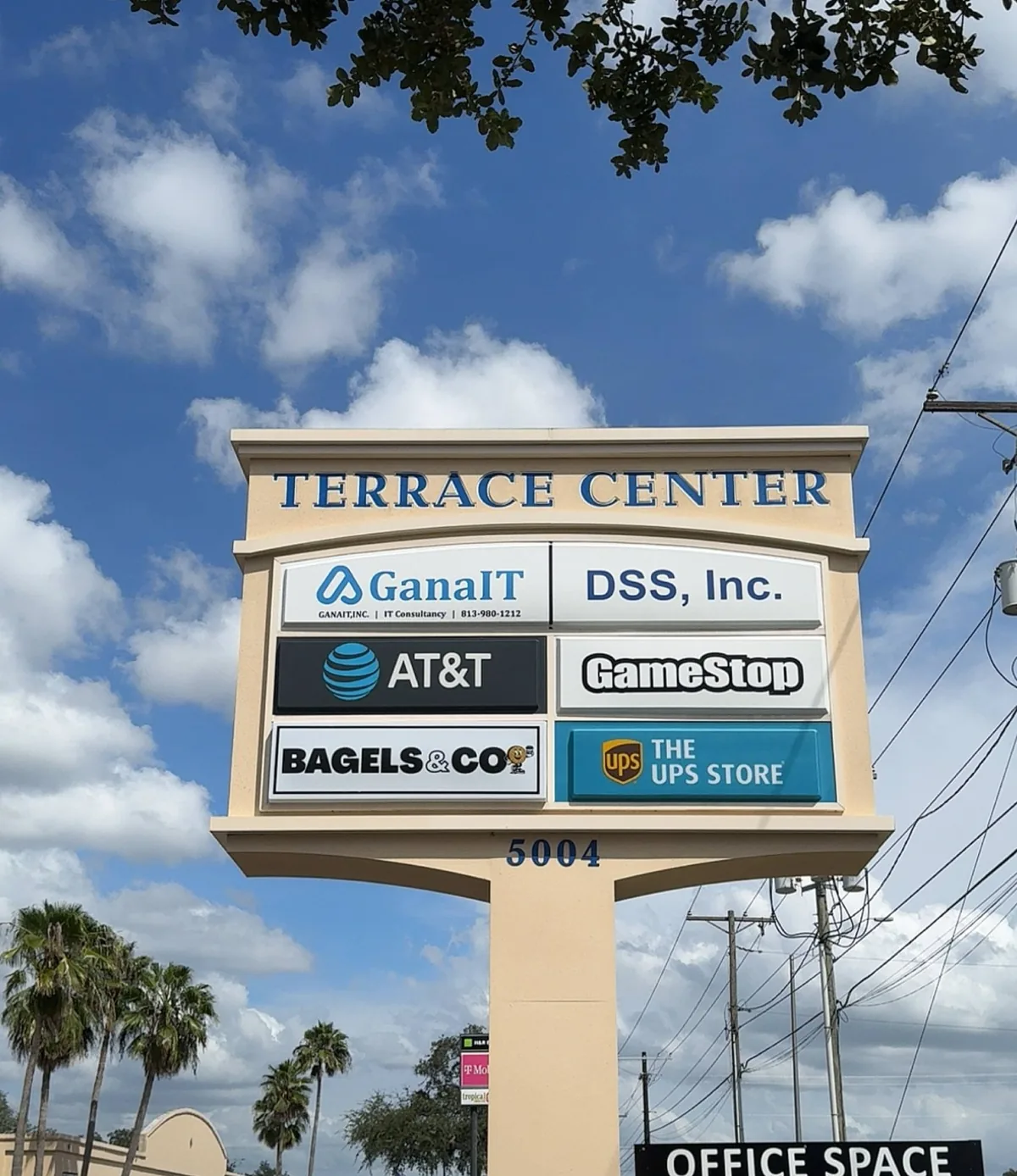
Pylon Signs and Tenant Panels
A pylon sign is the tall, illuminated structure that reaches drivers on a highway or busy road, often shared by several tenants. In a center, your panel on the existing pylon is usually the single most valuable piece of visibility the lease gives you. Freestanding signs
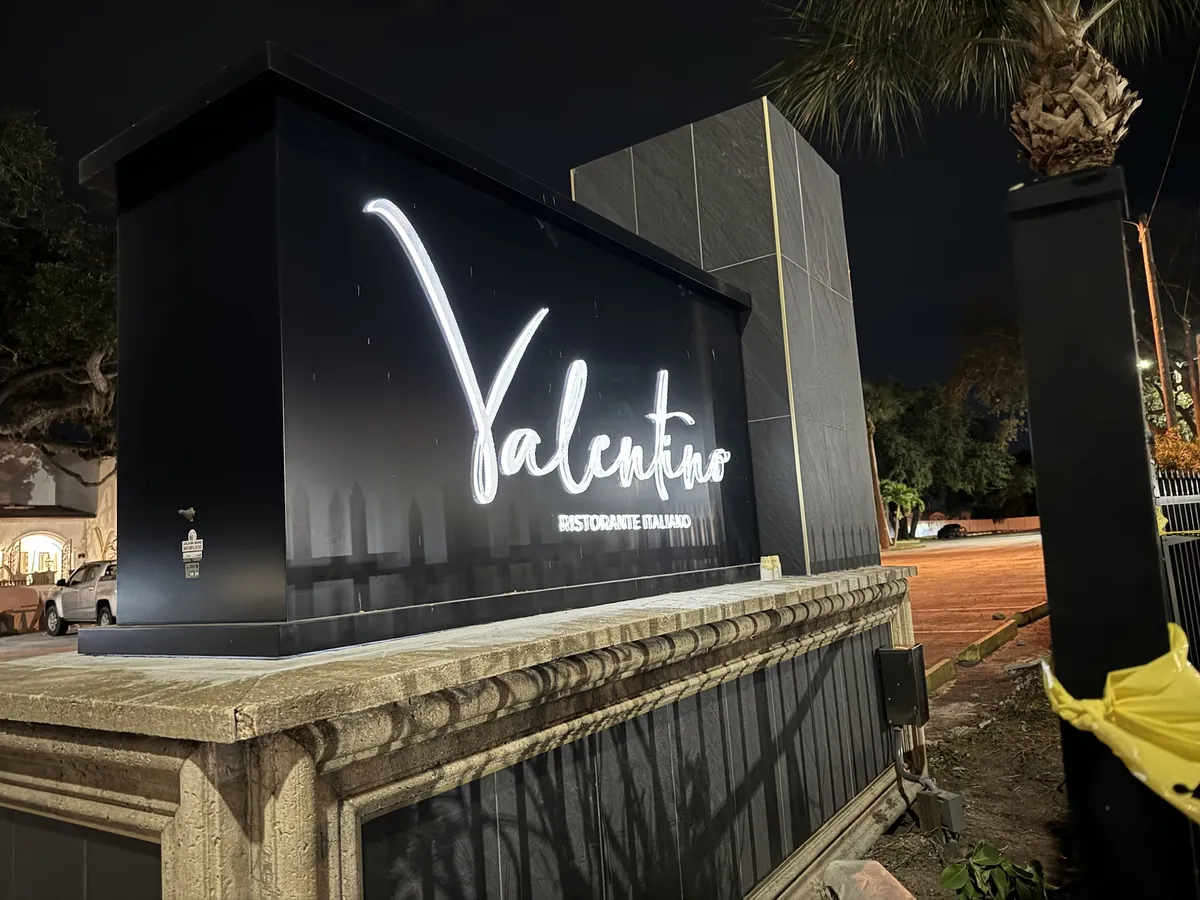
Monument Signs
Low to the ground and built from masonry, metal, or an illuminated cabinet, a monument sign gives a freestanding restaurant a permanent presence at the entrance and can be designed to match the building's architecture. Freestanding signs
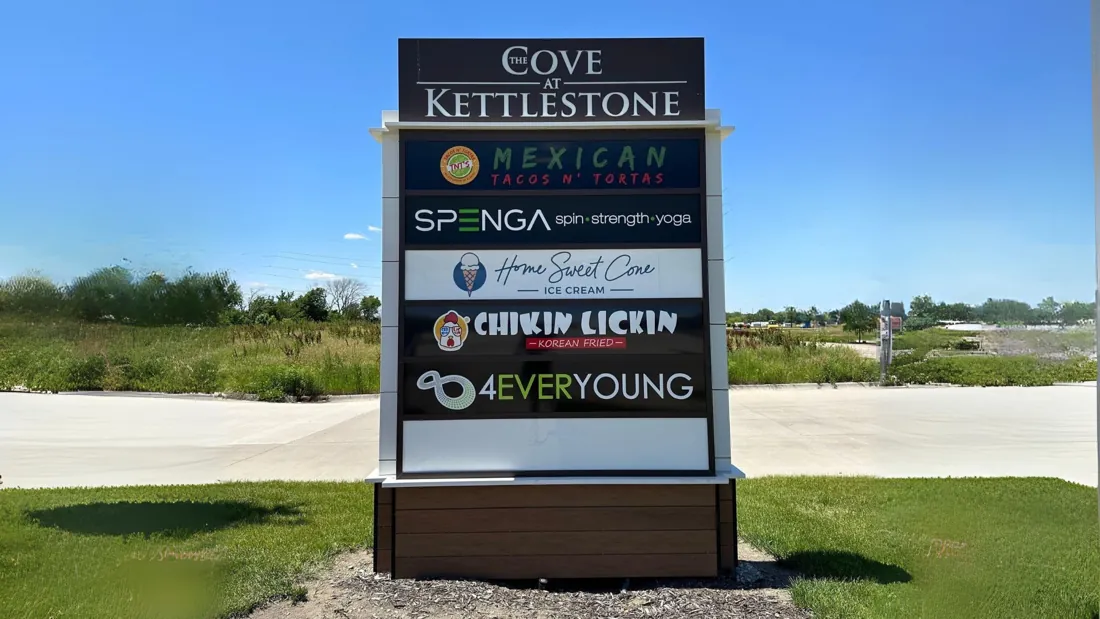
Directional, Drive-Thru, and Parking Signs
Order-point, pickup, and directional signage move cars through the property, and parking and entrance signs keep guests from circling. They are small, they are usually permitted with the main sign, and they are the first thing a driver reads. Part of every package we plan.
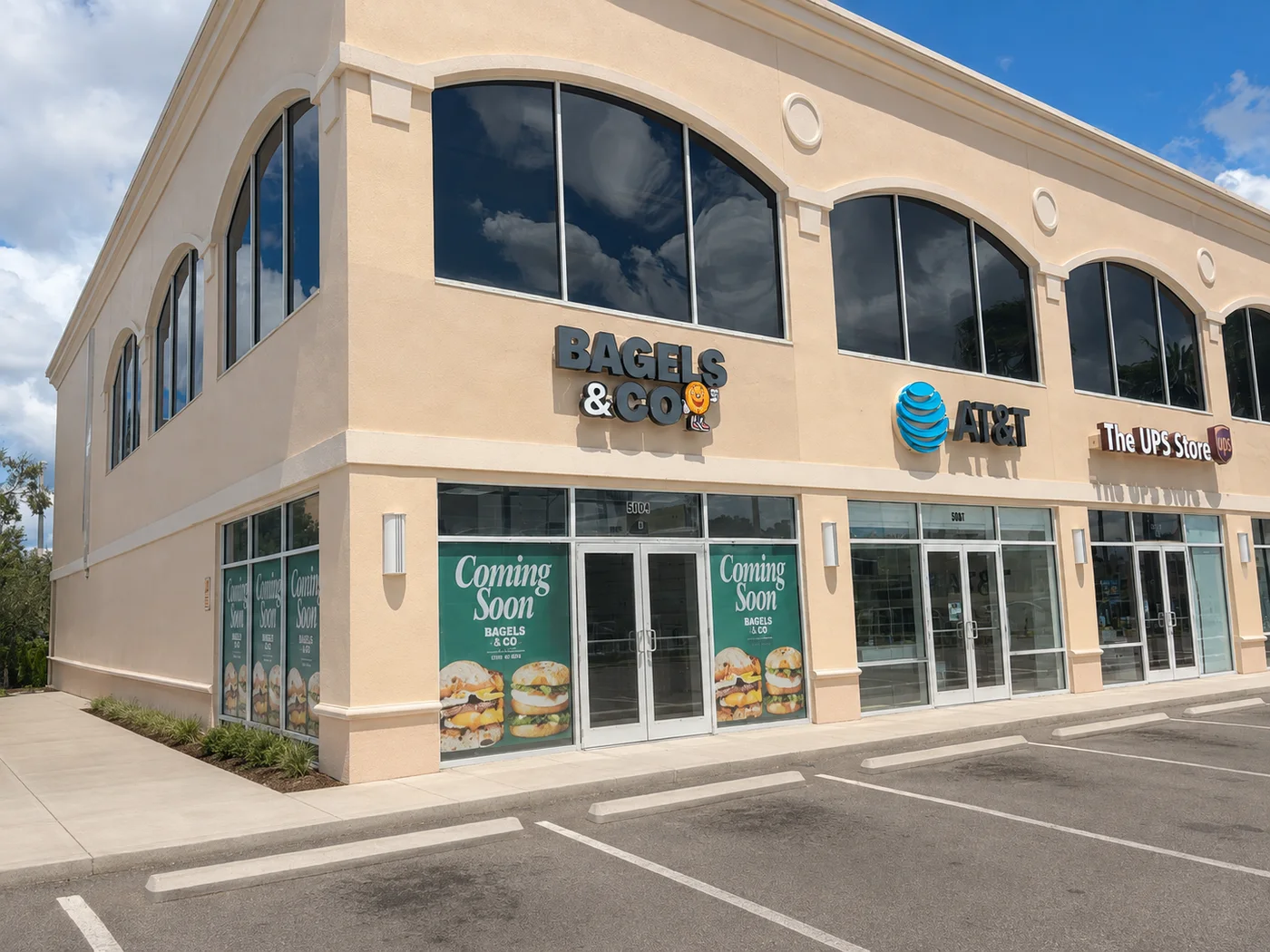
Window, Door, and Construction Graphics
Coming Soon graphics, hours and door vinyl, promotional window graphics, and construction barricade wraps keep the brand visible before opening and change out easily after. Custom digital printed signs and construction graphics
Inside the four walls, interior signage carries the same identity onto wall graphics, dimensional lettering, point-of-sale displays, and wayfinding, so the dining room finishes the story the pylon started.
What a national sign program looks like for restaurant and hospitality brands
Whether you are opening new restaurants, remodeling the estate, or rolling out a new prototype, every location moves through the same six stages, in order, with one point of accountability so your team can stay focused on opening great restaurants.
Site surveys and inventory
Accurate survey data before anything is fabricated: access, mounting, power, sight lines, and an inventory of the signage already on site, including the previous tenant's. For a remodel or reimage program, this is also where we document what stays, what gets refaced, and what comes down.
Prototype specification and brand book
Sign specifications documented so materials, finishes, illumination, and color stay consistent from site to site, with the variants the prototype needs for an end-cap, an inline space, a freestanding pad, and a downtown storefront. Cut sheets are produced for every sign type so any fabricator builds the same sign.
Permitting and landlord approvals
We research the code in every jurisdiction, submit to the landlord for criteria approval, file the drawings, and carry the permit through to approval. Multi-jurisdiction complexity is handled by us so it does not land on your construction team.
Fabrication to one spec
Sourcing and fabrication coordinated across the program so location twelve matches location one, with per-site budgets and transparent pricing rather than a lump sum that hides what each restaurant actually costs.
Phased installation, on your opening dates
Installs are scheduled by region and phased to your budget, timeline, and opening calendar, including after-hours and overnight work where the property or the city requires it. Our crews finished the illuminated Brio sign from a bucket lift at night, and craned the Chicken Guy neon channel letters into place in Orlando.
Close-out, reporting, and what comes next
Completion photos and documentation for every site, program-level reporting, and 24/7 access to every milestone in our project management system. Then the same team for maintenance, the rebrand when your identity changes, and the decommissioning when a location closes.
One partner. Every sign. Every location. A single point of accountability for the whole signage program, with dedicated project managers, scalable resources, proactive communication, and safety-focused professional crews. That is what restaurant construction teams hire us for.
Chicken Guy: scaling smart, one planned store at a time
Chicken Guy, the fast-casual concept from Guy Fieri and Robert Earl, takes a deliberate approach to expansion, and its sign program is planned from a detailed blueprint for each new location before anything is fabricated. National Sign Team runs that program, from pre-planning through the crane. In Orlando that meant neon channel letters craned into place on the opening schedule.
It is the same program our team has run for SoFresh and Bonchon, led by Mike Morelli, who has spent more than 30 years being called on by the nation's best known hospitality and QSR brands and has delivered signage for Brio, Bravo, and Buca di Beppo along the way.
Read the Chicken Guy Spotlight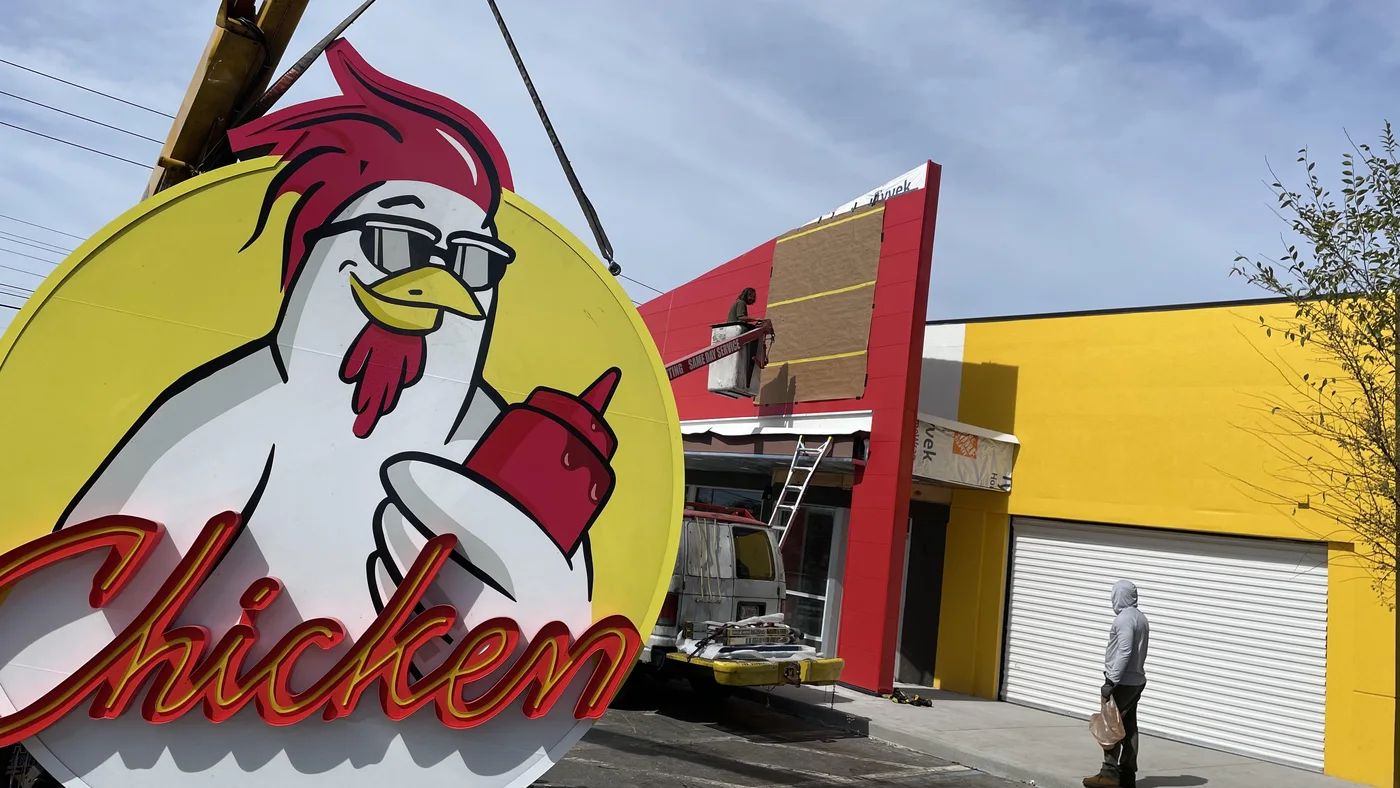
Bagels & Co: on brand from Coming Soon to open
For the newest Bagels & Co in Tampa, the storefront carried branded Coming Soon window graphics while the permanent signage moved through approvals, then National Sign Team installed the face-lit channel letters on the facade and the tenant panel on the Terrace Center pylon out on E Fowler Ave. Road, building, and window, all reading the same.
Read the Bagels & Co Spotlight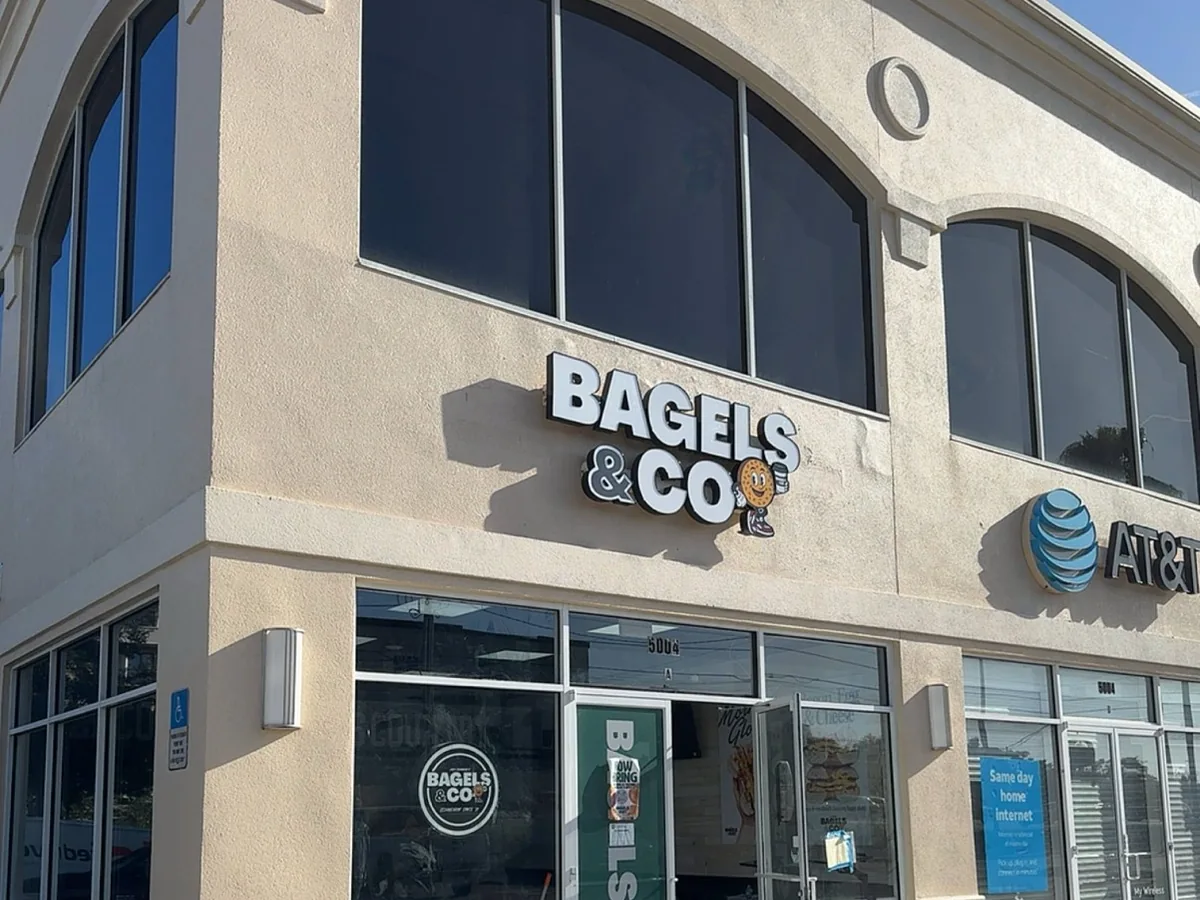
Restaurant and hospitality programs we have run
Restaurant & Hospitality Signage FAQs
What is restaurant and hospitality signage?
It is the complete set of signs that identify a restaurant, bar, cafe, or entertainment venue and guide guests through the property: the illuminated storefront sign, blade signs and awnings for foot traffic, pylon and monument signs and tenant panels for the road, drive-thru, pickup, directional, and parking signs for the lot, window and construction graphics before and after opening, and the wayfinding and displays inside. A national sign program plans, permits, fabricates, and installs all of it to one specification across every location.
How is restaurant signage different from retail or office signage?
Three things. The sign sits on the critical path to a fixed opening date, so permitting lead time matters more. It works mostly at night, so illumination type and code limits on illumination drive the design. And most guests decide from the road, so road visibility through pylon, monument, and directional signage is as important as the storefront itself. Landlord criteria and multi-jurisdiction permitting then vary the same brand from site to site.
What signs does a new restaurant need beyond the storefront sign?
Depending on the property: a panel on the center's pylon or a monument sign at the entrance, a blade sign for pedestrians, awnings, drive-thru or pickup signage, directional and parking signs, hours and door vinyl, Coming Soon window graphics, and interior wayfinding and point-of-sale displays. The site survey and the lease exhibit tell us which apply.
Do we need a pylon sign or a monument sign?
If the restaurant sits in a center, you usually do not build one; you secure a tenant panel on the existing pylon, and the landlord's criteria and lease decide whether you get one. A freestanding restaurant on its own pad typically needs its own monument or pylon sign, and local code decides the height and square footage allowed. We survey the sight lines and research the code before recommending either.
Who handles permits and landlord approvals?
National Sign Team does, at every location. We research the code for each jurisdiction, submit to the landlord for criteria approval, file the drawings, and carry the permit through to approval, so multi-jurisdiction complexity never lands on your construction team.
How far before opening should signage start?
With the construction drawings. Permitting is usually the longest step and it varies by city, and fabrication and installation follow it, so a sign started after the build-out is underway is the one most likely to miss the opening date. Coming Soon window graphics and construction graphics keep the brand visible while the permanent sign moves through approvals.
Can you run a remodel or new prototype across all of our locations?
Yes. Prototype roll-outs, multi-location remodels, refreshes, and rebrands run as phased programs: surveyed and documented site by site, permitted in each jurisdiction, fabricated to one spec, and installed by region on your budget and timeline. See our rebranding programs and multi-site signage programs.
What happens to the old signage when a location closes or rebrands?
We remove it, repair the surface, and dispose of it responsibly, so a closed or relocated site is handed back de-identified and a rebranded site never shows two identities at once. That is our debranding and decommissioning service, and it runs inside the same program as the new signage.
Do you work with franchisees as well as corporate stores?
Yes. A franchise sign program gives every franchisee the same specifications, the same point of contact, and the same permitting and installation process, so a location opened by a new owner reads exactly like a corporate store.
Opening, remodeling, or rebranding restaurants?
Tell us about your locations and your opening dates. We survey, permit, fabricate, and install to one spec, coast to coast, and you track every milestone in real time.