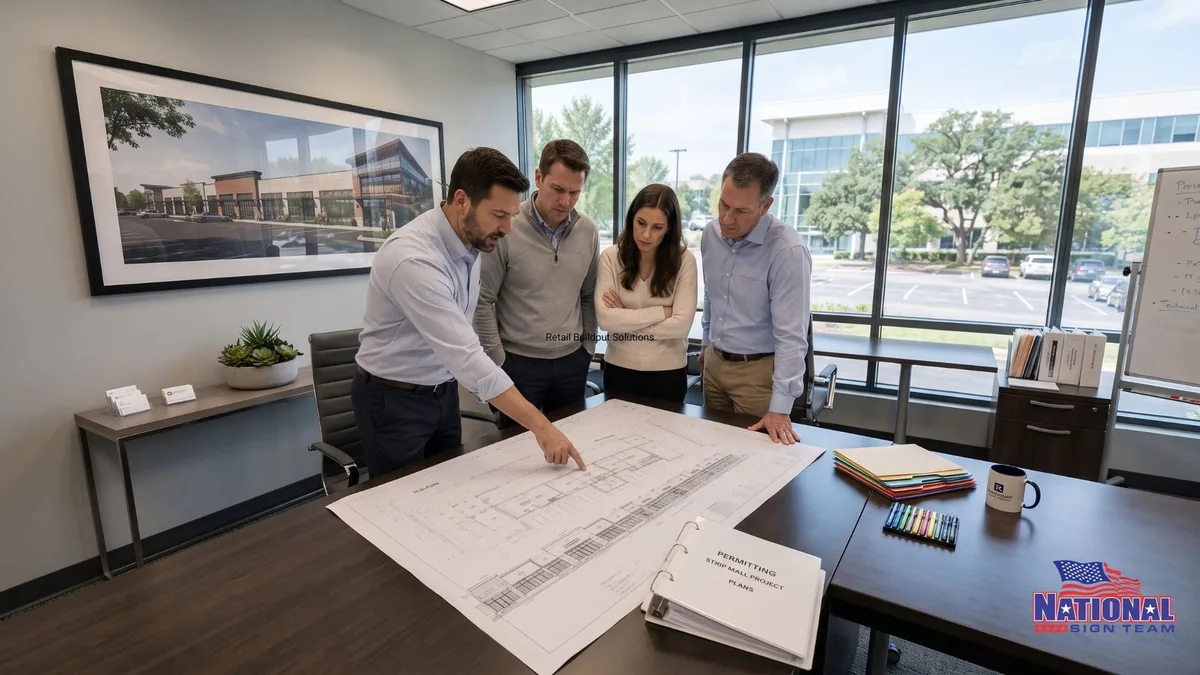
Here you are: another retail buildout project, seemingly on track, until... the signage. It's a scene far too familiar to Construction Directors nationwide. Signage, often relegated to the bottom of the 'to-do' list, is treated as an afterthought until it suddenly escalates into a full-blown emergency.
This 'afterthought' mentality inevitably leads to a cascade of problems: critical survey mistakes that ripple through the entire project, missed deadlines that push back grand openings, and last-minute budget-busting change orders that eat into your carefully planned margins.
But what if there was a way to flip the script? What if you could transform signage from your biggest headache into a seamless, predictable part of every retail construction project? At National Sign Team, we understand these frustrations, and we're here to show you how to do just that.
The Afterthought Trap: Avoiding Retail Signage Fire Drills
For many Construction Directors, the initial focus of a retail buildout rightly centers on the foundational elements: the structural integrity, the complex electrical systems, the plumbing, and the interior finishes. These are the big-ticket items, the ones that demand immediate attention and significant resources. Signage, by comparison, often feels like a minor detail, something that can be sorted out once the 'real' work is done. This perception, however, is a classic "afterthought" trap - a seemingly small oversight that can trigger an avalanche of avoidable fire drills down the line.
Why Signage Gets Pushed Aside
The primary reason signage gets delayed is often a simple matter of prioritization. In the initial planning stages, architects and GCs are busy with blueprints, permits for major construction, and securing core materials. Signage design and fabrication, which require their own set of permits, detailed site surveys, and specialized production, are frequently deferred. The assumption is that because signs are typically installed towards the end of a project, planning for them can also wait. This is a critical miscalculation. When signage planning is delayed, it means crucial decisions about design, materials, and placement are rushed. There's less time to explore cost-effective options, negotiate with vendors, or ensure the design perfectly aligns with brand standards and local ordinances. This reactive approach leaves little room for flexibility, forcing hurried choices that often come with a premium price tag and an increased risk of errors.
The Domino Effect of Delay
Delaying sign project management until late in the construction checklist creates a detrimental domino effect that impacts multiple facets of your buildout. Imagine this scenario: the building is nearly complete, and suddenly, it's time to finalize the exterior signage. You discover the initial plans didn't account for a critical architectural feature, or the local zoning board has specific restrictions on sign size or illumination that weren't considered. This isn't just a signage problem; it becomes a construction problem. Permit applications, which can take weeks or even months to process, are now submitted late, holding up installation. Fabrication is rushed, increasing the likelihood of mistakes. Installation teams are then pressured to work on an accelerated schedule, potentially incurring overtime costs or compromising safety.
The True Cost of Waiting
The financial implications of treating signage as an afterthought are substantial. What might seem like a small detail can quickly become a budget buster. Expedited shipping fees for materials, overtime for designers and installers, and the cost of last-minute change orders can inflate your project expenses significantly. Furthermore, if a sign is fabricated incorrectly due to rushed planning or inaccurate data, the cost of re-fabrication and re-installation can be astronomical, not to mention the lost time. Beyond the direct financial costs, there's the intangible cost of missed opportunities. A compromised sign design due to rushed decisions can detract from the brand's image and customer experience.
Eliminating Field Surprises: Accurate Sign Site Surveys for Retail
In the world of construction, the phrase "measure twice, cut once" is a mantra for a reason. Yet, when it comes to signage, this principle is often overlooked, leading to some of the most frustrating and expensive project delays. Relying on outdated architectural drawings, quick visual estimates, or generic site plans for sign fabrication is a recipe for disaster. The reality on the ground can be vastly different from what's on paper, and these discrepancies are the primary culprits behind costly fabrication errors and installation mismatches.
The Foundation of a Flawless Sign Project
An accurate, early-stage site survey is the bedrock of any successful signage project. It's not just about measuring the space where the sign will go; it's a comprehensive investigation that considers every variable that could impact design, fabrication, and installation. This meticulous approach prevents unexpected challenges from turning into major setbacks when the sign arrives on site. Think of it as forensic planning for your signage. A detailed survey proactively identifies potential obstacles and ensures compliance with all relevant regulations, saving you from headaches and additional costs down the line.
What an Expert Site Survey Uncovers
A professional, early-stage site survey conducted by an experienced commercial sign vendor goes far beyond basic measurements. It's a comprehensive data-gathering mission that provides a complete picture of the installation environment. Here's what it typically includes:
Not just length and width, but critical depth, setback requirements, and specific mounting surface details.
Multiple angles and close-ups of the proposed installation area, surrounding structures, and potential obstructions.
Identification of current electrical access, conduit pathways, and any structural elements that may affect mounting.
Detailed review of local municipal zoning laws, building codes, and landlord specifications regarding sign size, height, illumination, and placement.
Pinpointing potential issues like trees, utility lines, existing architectural features, or neighboring signs that could block visibility.
Assessing the type of façade, its condition, and the best methods for secure and aesthetic attachment.
This level of detail ensures that when the sign is designed and fabricated, it's built to fit perfectly and meet all regulatory requirements, whether it's for a simple fascia sign or complex architectural signs.
Avoiding Fabrication and Installation Headaches
Without an accurate site survey, you run the significant risk of fabricating a sign that simply doesn't fit or can't be installed as planned. Imagine the frustration: the sign arrives, the installation crew is ready, only to discover it's too wide for the designated space, conflicts with an unseen conduit, or violates a previously unknown setback rule. The consequences are immediate and severe:
The sign may need to be partially or entirely rebuilt, incurring significant material and labor costs.
Finding solutions for unexpected site conditions can halt installation for days or weeks, impacting your overall timeline.
Re-fabrication, additional materials, expedited shipping, and extended labor hours quickly escalate costs beyond estimates.
Non-compliant designs discovered late in the game can lead to permit rejections, fines, and further delays.
By investing in early, expert site surveys, Construction Directors can proactively eliminate these field surprises. It ensures that the sign fabricated is the sign that will be installed, on time and on budget, without the dreaded last-minute scramble.
Streamlining Signage Handoff: Single Vendor for Retail Projects
Managing a retail buildout is a juggling act of monumental proportions. Construction Directors are constantly coordinating between architects, interior designers, general contractors, sub-contractors for various trades, and a host of material suppliers. When signage is treated as a separate, fragmented component, this juggling act becomes even more complex, often leading to communication breakdowns, missed deadlines, and an undue burden on your general contractor.
The Burden of Vendor Juggling
Consider the traditional approach to signage: you might have one firm handling design, another fabricating the components, and a third company responsible for installation. Each entity operates independently, with its own project managers, communication protocols, and timelines. This creates a fragmented process where information can easily get lost, misinterpreted, or delayed. Who is responsible when there's a discrepancy between the design specs and the fabricated product? Who ensures the installation team has all the necessary permits and access?
Often, this coordination burden falls squarely on the shoulders of your general contractor, who is already stretched thin managing the core construction. They become the intermediary, translating information between disparate teams, chasing down updates, and resolving conflicts - tasks that divert their attention from critical on-site management. This multi-vendor approach doesn't just add complexity; it introduces points of failure that can derail your entire project schedule and budget.
The Power of a Dedicated Sign Project Manager
The solution lies in consolidating your signage needs with a single, full-service commercial sign vendor that offers dedicated project management. Imagine having one point of contact, a seasoned professional who oversees every aspect of your signage project from conception to completion. This dedicated project manager acts as an extension of your team, understanding your project's unique requirements, timeline, and budget constraints.
A true full-service sign partner doesn't just fabricate signs; they provide comprehensive support across all phases:
- Design Consultation: Ensuring the sign meets brand standards, aesthetic goals, and functional requirements.
- Site Survey & Planning: Conducting the detailed surveys discussed earlier to prevent field surprises.
- Permitting & Compliance: Navigating the complex world of local zoning, building codes, and landlord approvals.
- Fabrication: Manufacturing high-quality signs using the right materials and craftsmanship.
- Installation: Managing skilled installation teams to ensure efficient and safe deployment.
- Ongoing Communication: Providing regular updates, proactively identifying potential issues, and offering solutions.
This integrated approach removes the burden of coordination from your general contractor, allowing them to focus on what they do best: managing the core construction. It simplifies communication, streamlines workflows, and ensures accountability across the entire signage lifecycle.
Seamless Coordination, Superior Results
Working with a single commercial sign vendor like National Sign Team means more than just convenience; it leads to superior project outcomes. You benefit from:
- Consistent Quality: A single vendor ensures uniform quality standards from design to installation, reflecting positively on your brand.
- Reduced Risk: Fewer hand-offs mean fewer opportunities for miscommunication and errors, significantly lowering project risk.
- Improved Efficiency: A unified team works more cohesively, accelerating timelines and ensuring on-time delivery.
- Cost Savings: Streamlined processes and proactive problem-solving minimize costly delays and change orders.
- Enhanced Accountability: One vendor is responsible for the entire sign project, providing clear accountability and peace of mind.
When you partner with a vendor that handles everything, from the initial sketch to the final installation, you're not just buying a sign; you're investing in a seamless, stress-free process that keeps your retail buildout on track.
Transforming Signage from Delay to Delivery
The notion that signage is merely an aesthetic afterthought is a costly misconception that can plague retail buildouts with delays, budget overruns, and unnecessary stress. As Construction Directors, you have the power to change this narrative. By adopting a proactive approach and partnering with the right experts, you can transform signage from the number one project delay into a predictable, efficient, and value-adding component of every retail construction project.
The keys to this transformation are clear:
- Early Engagement: Integrate sign project management into the initial planning stages, treating it as a critical path item, not an afterthought.
- Accurate Site Surveys: Invest in detailed, professional site surveys to eliminate field surprises, prevent costly fabrication errors, and ensure seamless installation.
- Single-Vendor Partnership: Work with a full-service commercial sign vendor with dedicated project managers to streamline coordination, enhance communication, and remove the burden from your general contractor.
At National Sign Team, we are committed to helping Construction Directors achieve flawless retail buildouts. Our expertise, integrated services, and dedicated project management approach are designed to deliver your signage projects on time, on budget, and to the highest standards of quality. Don't let signage be your next project delay. Take control and ensure your brand shines brightly from day one.
Ready to fix your retail buildout delays?
Experience the National Sign Team difference. Transform your signage from your biggest headache into a seamless, predictable part of every retail construction project.
Let's discuss your next retail buildout today.