
A rebrand looks simple on the last page of the brand book: old logo, new logo. Across thirty or three hundred locations, it's a schedule, a budget and a long list of decisions about what happens in what order.
Phasing is how a multi-location rebrand gets done without stores sitting dark, crews crisscrossing the country, or customers seeing two brands at once for months. Here's how to plan it.
Survey every location first
You can't phase what you haven't measured. Before any order goes out, each location needs a survey: what signs are there now, how they're mounted, what power is available and what the landlord's criteria allow. The survey turns a vague scope into a real list of work per site, and it's where the surprises come out while they're still cheap.
Pilot one location
Put the new brand on one store before you roll it out everywhere. A pilot shows how the new signs look on a real building, at night and from the parking lot. It tests the install process and catches design details that only show up at full size. A change made after one store costs far less than the same change after twenty.
Build waves
Group the remaining locations into waves. Good waves usually share:
- Geography, so crews move from site to site without long trips in between
- Permit timing, so locations in slow jurisdictions get filed early
- Landlords, since one shopping center owner may approve several of your stores at once
- Business priority, such as flagship stores, new markets or locations with a grand reopening planned
Each wave gets its own permit filings, production run and install schedule.

When every location has to switch at once
Some rebrands can't be phased. Banks are a common example: they're federally regulated, and every branch has to change over on the same day. A same-day rebrand is realistic with the same groundwork. Every site gets surveyed, permitted and approved ahead of time, the signs are built and staged, and crews are scheduled at every location for the same day.
Keep every storefront branded
The gap between taking the old sign down and putting the new one up is when a location looks closed. Keep it short and cover it. Schedule removal, patch and paint, and installation together, and where the new sign isn't ready yet, a temporary banner keeps the storefront branded in the meantime.
Plan for the old signs
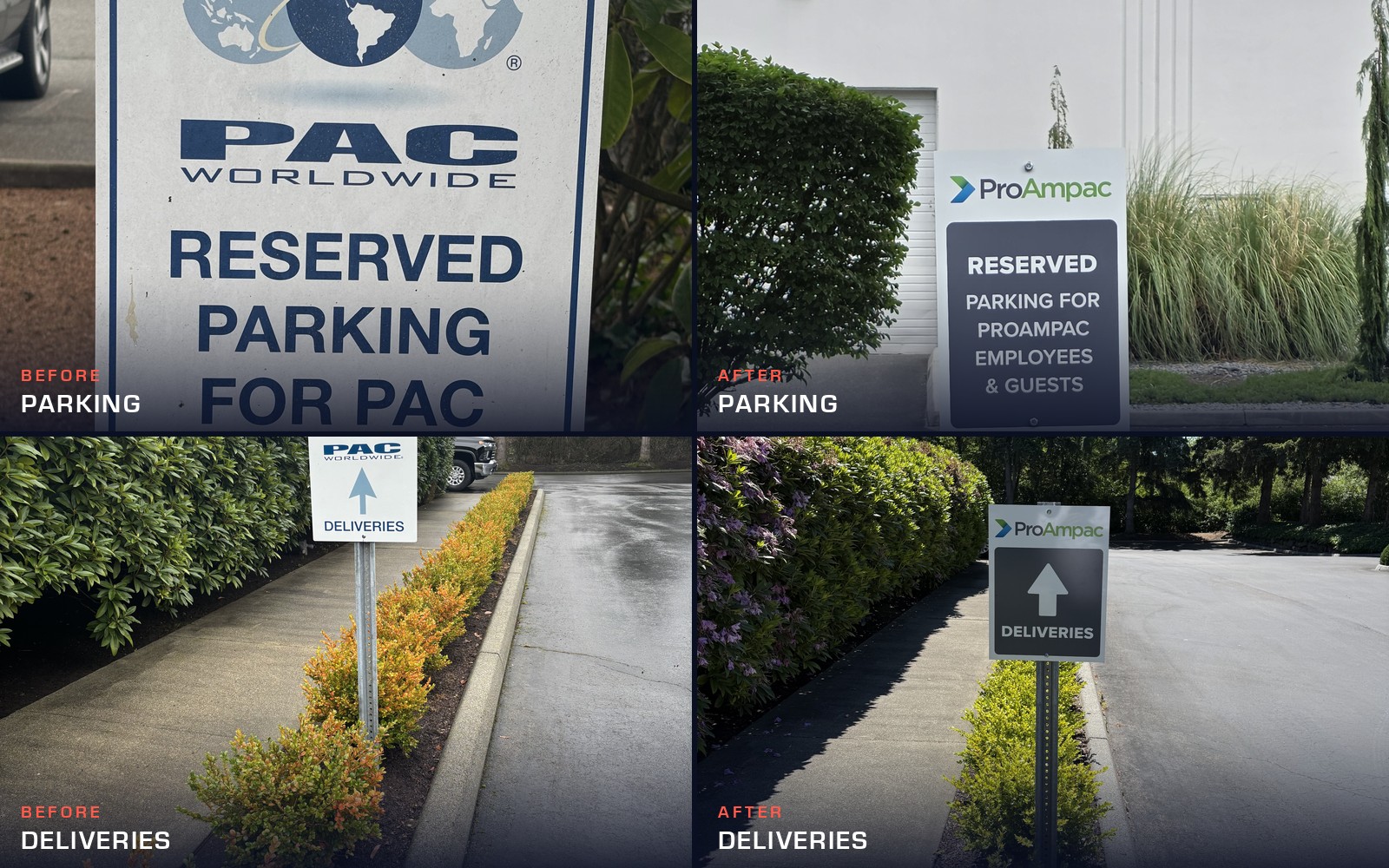
Every rebrand is also a debrand. Old signs come down, holes get patched and the material has to go somewhere. Build removal, disposal and recycling into each wave, and decide early whether any existing signs can be refaced instead of replaced, since that can save real money on a large program.
Track it across every location
A phased rebrand has dozens of moving parts in every wave. One named project manager running the whole program knows which sites are surveyed, permitted, in production and installed. You can check every location's status in Smartsheet at any time, and your project manager calls, texts and emails when something needs a decision.
Common questions
How long does a multi-location rebrand take?
It depends on the number of locations, how many jurisdictions are involved and how quickly permits move in each one. Phasing lets the first waves finish while later ones are still in permitting.
Should interior and exterior signs change at the same time?
Usually, at each store, so customers never see the old brand inside and the new one outside. Exterior signs typically need permits and interior signs often don't, so the schedule has to allow for both.
Can existing signs be reused?
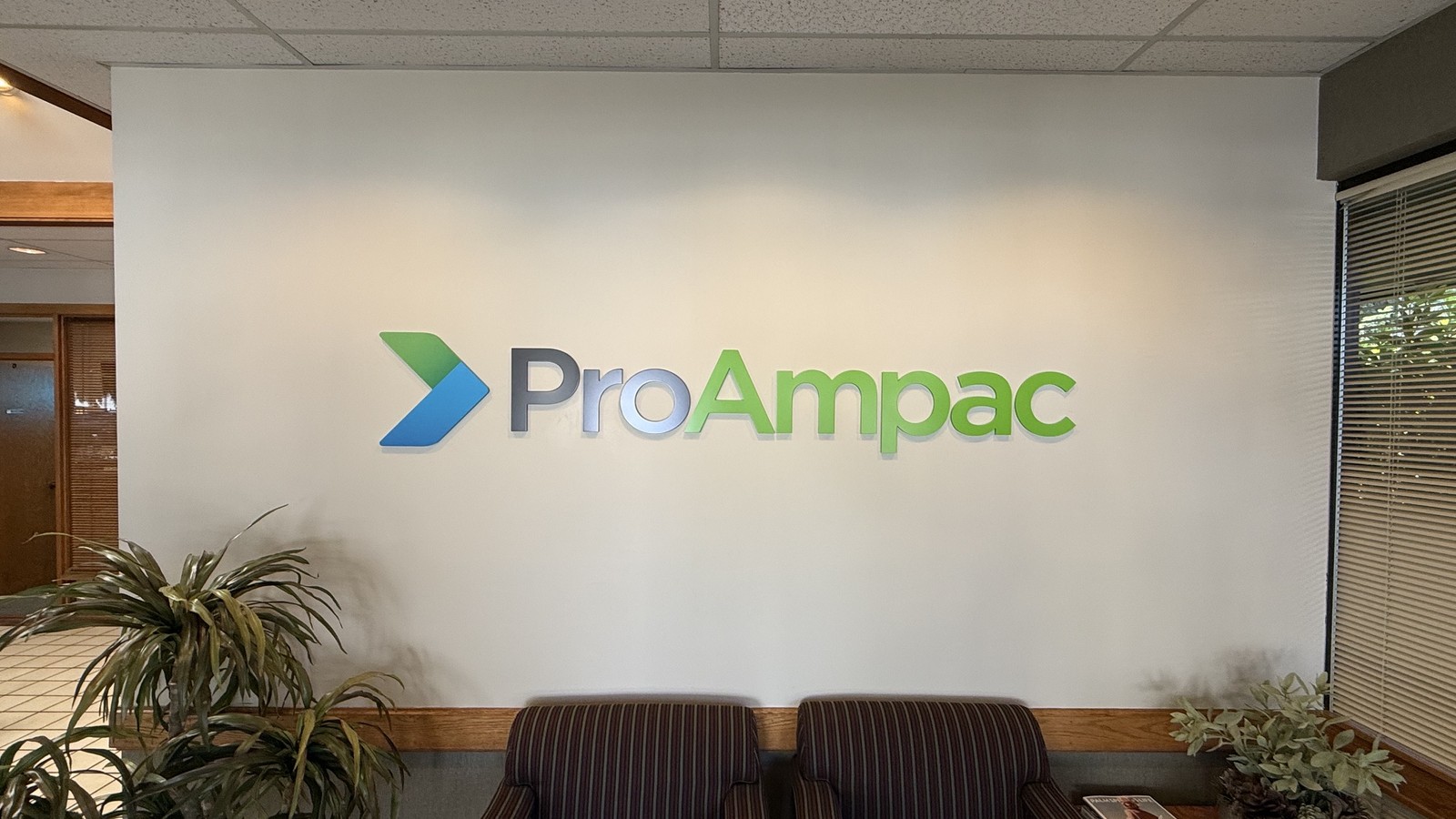
Sometimes. Cabinets and structures in good condition can often be refaced with the new brand, which saves material and money. The survey tells you which locations qualify.
What does a pilot location tell you?
How the new brand reads at full size on a real building, in daylight and at night, and how long installation really takes. Those lessons go into every wave after it.
Where this fits
Phased rollouts are the core of our rebranding programs, and they're a big reason brands bring in national sign companies for a rebrand. One team runs every market on one schedule and one standard. For the bigger picture on keeping a multi-site rebrand calm, see Rebranding Multi-Site Locations Without Chaos.
Planning a rebrand?
Send us your location list. We'll come back with a survey plan, a suggested wave structure and the permitting picture for each market.